What we stand for – June 2023

Let us Remember Why We are on Earth

With so much evil in the world, such as devil worship, etc., uncompromising Catholics must stand up for Christ the King, not accepting any Liberalism or Modernism in Faith or moral!  God placed us on earth for this exact reason!

Lesson #23 – Meditation of Two Standards

                    Mary’s School of Sanctity                   

Lesson #23 – The Spiritual Exercises of St. Ignatius – SECOND WEEK – THE MEDITATION ON THE TWO STANDARDS

In the last several lessons we have been using St. Ignatius’ method for a special way of meditating which is to focus on the sights, sounds, and actions of those we are considering.  This method is very profitable and helps us draw many conclusions with which to subsequently gain spiritual strength. This meditation which we now undertake will use this same method in a more in-depth manner.

This is the famous meditation on the Two Standards and it is especially beneficial for our spiritual life.  We will use our imagination to become familiar with this most momentous battle that takes place here on earth, namely, the battle between Christ and Satan.  Ever since the Fall of Adam this battle has been intense and will continue until the end of time.  If we truly want to be happy for all eternity, then it is crucial for us to study all the aspects of this battle.

Let us go forward, then, and take a detailed and careful look at the two sides engaged in this battle.  We cannot withstand our enemy if we do not know him and his tactics.  Also, we cannot be faithful Soldiers of Christ if we do not have an intimate knowledge of Him.  So let us study what we need to know to be valiant warriors in the Church Militant.

St. Ignatius first shows us the leader of each camp, then he elaborates the plan of each one, and lastly, he describes how each implements his plan. 

First, we set out what St. Ignatius gives us for this meditation, and then as usual we will give some possible considerations on those points that he lays out for us.

A Meditation on Two Standards

The preparatory prayer is the same as usual: I ask God Our Lord for the grace that all my intentions, actions, and works may be directed purely to the service and praise of the Divine Majesty.

The FIRST PRELUDE is the history of the subject matter.  Here it will be how Christ Our Lord calls and wants all men beneath His standard, and how Lucifer, on the contrary, wants all men under his.

The SECOND PRELUDE is the mental representation of the place. Here it will be to see a vast plain covering all the region about Jerusalem, where the supreme Leader of the good is Christ Our Lord; and another plain in the region of Babylon, where the evil chieftain of the enemy is Lucifer.

The THIRD PRELUDE: I will ask for the grace that I desire.  Here it will be to ask for a knowledge of the deceits of the evil chieftain and help to guard myself against them, and a knowledge of the true life which the supreme and true Leader reveals, and for the grace to imitate Him.

The FIRST POINT is to imagine how the evil chieftain of all the enemy is seated in the center of the vast plain of Babylon, on a great throne of fire and smoke—a horrible and terrible sight to behold.

The SECOND POINT is to consider how he calls together countless demons, and how he scatters them, some to one city, some to another, throughout the whole world, missing no province, no place, no state of life, nor even any single person.

The THIRD POINT is to listen to the harangue which he delivers to them, how he spurs them on to ensnare men and to bind them in chains.  He bids them first to tempt men with the lust of riches (as he is most accustomed to do), that they may thereby more easily gain the empty honor of the world, and then come to unbounded pride.  The first step in his snare is that of riches, the second honor, and the third pride.  From these three steps Satan leads on to all other vices.

In like manner, we are to imagine on the other hand, the supreme and true Leader, Who is Christ the Lord.

The FIRST POINT is to consider how Christ Our Lord takes His stand in a lowly place, in that great plain about Jerusalem, and He is beautiful and gracious to behold.

The SECOND POINT is to see how the Lord of the entire world chooses so many persons, apostles, disciples, etc., and sends them throughout the world to spread His sacred doctrine among men of every state and condition.

The THIRD POINT is to listen to the discourse which Christ Our Lord makes to all His servants and friends whom He sends on this mission, charging them that they should seek to help all men; first, by encouraging them to embrace the most perfect spiritual poverty, and if it should please His Divine Majesty, to choose them for it, also to embrace actual poverty. Secondly, by encouraging them to desire insults and contempt, for from these two things come humility.  So then there are three steps: the first, poverty opposed to riches; the second, scorn and contempt, opposed to worldly honor; the third, humility, opposed to pride.  From these three steps, let them lead men to all virtues.  

The COLLOQUY: I will now address a colloquy to Our Lady and I will ask her to obtain for me from her Son and Lord the grace that I may be received under His standard, first, in the most perfect spiritual poverty, and should it so please His Divine Majesty to choose me, also in actual poverty; secondly in bearing reproaches and offenses, thus imitate Him more perfectly, provided only I can suffer them without sin on the part of any other person or displeasure to His Divine Majesty.  Afterwards, I will say the “Hail Mary.”  I will ask the Son to obtain for me the same graces from the Father, and I will then recite the “Anima Christi.”

I will also ask the Father to grant me the same graces, and I will then say the “Our Father.”

The Two Leaders and Their Corresponding Standards

The Standard of Satan

Considerations for the FIRST POINT: we make a mental representation of the plain of Babylon with the devil on his fiery throne.

Once again, we can find help from Fr. Hurter’s setting forth the meat of the meditation.

a. Holy Writ depicts the evil spirit as the prince of darkness (Eph. 6:12; Col. 1:13) and the father of lies. (John 8:44).  As such he deceives and confuses, stirs up dust so that one cannot see, awakens doubt, leads to unbelief, and brings on fickleness of character.   Wherever we notice these traits, there is the smoke of hell and the evil spirit is at work.

b. According to Holy Writ he is a peace-disturber, who sows cockle (Matt 13:25) and the seeds of discord.   As such a turbulent being he causes unrest, excitement, tears hearts asunder, and shows a restless and violent demeanor.  Where that is to be found, there the smoke of hell is rising and the evil spirit is in the background.

c. He is the prince of hell, where despair is prevalent.  Hell is “a land of misery and darkness, where the shadow of death, and not order, but everlasting horror dwelleth.” (Job 10:22)   As prince of hell he causes sadness, disappointment, despondency, makes the heart to ache, and then to despair.  Where this frame of mind is prevalent, there is the smoke of hell, and there breathes the evil spirit.

d. He is the rebel, who from the beginning of the world rose up against God and through whom the spirit of revolt invaded paradise and now pervades the whole world.  As such, he naturally urges men on to stubbornness and obstinacy, awakens in them pride, and drives them to insubordination and rebellion against authority.  Where such fruits ripen, the smoke of hell is noticeable; there the evil spirit has already gained a considerable influence.[1]

Yes, let us see this horrific scene.  Look at Babylon – the place where the people conceitedly thought that they could build a tower to reach heaven.  But God confounded them by having them speak in different tongues.  How fitting for the proud evil one to pick this place to have his pompous fiery throne.

See how the devil with his unbounded pride pretends to be so very powerful.  He presumes that he has more knowledge than he really has.  He makes a big “show of strength” and pretends to be in charge of the world—as if he has control of everything!  In this way he tries to entice us to discouragement and despair.

He displays smoke, which represents the darkness of hell.  This smoke causes confusion everywhere.  This smoke also causes fear—that age old satanic tactic used as an attempt to overcome souls!! 

Remember to consider how the devil uses this same smoke as a means to hide his deceptions and his sowing of half-truths.

Look at the fire, too!  That fires dazzles brilliantly and plays on the senses.  It excites the senses not only to pleasures but also to fear as well.  It causes noise and movement in order to agitate the soul and make the soul extremely restless.

Indeed, the devil’s attack is a subtle one.  He hates God with all his might and attacks maliciously, ferociously, and unceasingly.  Furthermore, we must never forget that he cannot force us to sin and cannot do anything to us unless God permits it.  Remember, too, that we have powerful weapons against Satan.  In fact, St. Vincent de Paul tells us that, “the most powerful weapon with which to overcome the devil is humility; because not knowing how to use it, he does not even know how to defend himself from it.”[2]

Now that the scene is set in our imagination, let us study the wretched plan of action the devil has.

Considerations for the SECOND POINT: the devil expounds his plans

We will allow Fr. Hurter’s words to paint the vivid scene for us:  

In the council of war, which he holds with his partisans, Lucifer unfolds the following plea:

Awaken in the hearts of men a love, an attachment, and a passion for earthly goods.  When they are once engrossed by worldly riches they will run, work and strive for them, forget heaven and things eternal, and neglect the salvation of their souls.  Having met with some success, they become conceited, look down upon others, seek for flimsy honors and esteem, and then become ambitious.  When they have compassed distinction, they are captured by pride: and no sooner has pride obtained the mastery of the heart of men then they will take no advice, submit to no authority, however sacred, and they will make light of every commandment.  Thus, the way is cleared to self-deification, and the evil spirit is implicated in our rebellion against God.  The way to it, therefore, is avarice, ambition, and pride.[3]

Considerations for the THIRD POINT: the devil puts his plans into action

We see in the following quotes how Fr. Hurter describes how the devil puts his plans into action:

1. The prince of darkness, to carry his cunningly devised plan into effect, sends his spirits into every land and into all places.  No one can escape their promptings and temptation.  They are bent on carrying out the orders given them so eagerly that St. Peter warns the faithful: “Be sober, and watch, because your adversary the devil, as a roaring lion, goeth about seeking whom he may devour.” {1 Peter 5:8}

It is sad, indeed, to see that thousands and thousands of men give themselves up to the devil as his assistants and tools to found and spread his kingdom upon earth, to plant his standard everywhere, and to entice their brethren into his net.  These aiders and abettors are more dangerous than the evil spirit himself.  They make use of every imaginable weapon, science, power, astuteness, deduction, threats and enticements.  They are always on the alert and work indefatigably for the ruin of souls, sparing no effort or sacrifice.  And of the terrible results the history of the world is an evident attestation.  How successful the craftiness of the evil spirit is!  What a scramble, what a striving and chasing after things of this earth!  Avarice and greed dominate the ways and doings of men.  What plans of ambition do they not pursue in all things!  How pride, emancipation from God, and self-deification of human society has increased![4]

It is obvious that the devil doesn’t miss anyone in his plan to devour souls.  He goes after both laity and religious. 

Fr. Hurter also relates how the devil attacks priests and religious in a more subtle way than he attacks the laity.  Firstly, the devil will divert religious from striving for perfection to the seeking of something for themselves in the way of bodily comforts and attachment to creatures.  In this manner the religious will become a less useful instrument in the hands of God and will not work for the salvation of souls.  The religious is then easily led to want the esteem of others, to think highly of himself and desire promotions.  Fr. Hurter gives us more insights about the cunning traps the devil lays for those consecrated to God:

He [the devil] will induce us [priests and religious] to have a high opinion of our talents and ability, to be prepossessed in our own favor, and consequently to seek preferments and places of honor, to feel easily slighted and offended, and to become jealous of others.  If he succeeds in this, our zeal for souls shall have been spoiled and we shall belong to those of whom the Apostle says: “For all seek the things that are their own, not the things that are Jesus Christ’s.” {Phil. 2:21}  He will tempt us to take any liberties by which we withdraw ourselves from the restraint of obedience, emancipate ourselves and become willful.  And thus, pride is nourished and the striving after real virtue and the following of Christ are undermined.[5]

St. Teresa of Avila gives us a similar warning about these dangers by saying, “It seems to me that honors and riches always go together: he who loves honor never hates riches, while he who hates riches seeks no honors.”[6]  

We see plainly how we must abhor riches because they are so dangerous to our salvation.  Listen to how St. Teresa of Avila is very frank when she gives a strong warning to her spiritual daughters in religion:

If poverty is real, it guards purity and all other virtues better than do fine buildings.  Keep to this, I beg of you by the love of God and His Blood.  If, with a good conscience, I could wish that the day you build a costly dwelling it may fall and kill you all – I say, if I could do so with good conscience – I would wish it and beg God to grant it.  It looks very ill, my daughters, to build fine houses with needy men’s alms!  God forbid it!  Ours should be poor and mean in every way.  Let us to this extent at least resemble our King.  He had no home except the stable of Bethlehem where He was born, and the Cross where He died.  Within these houses few luxuries could be found![7]

Because riches lead one to seek the praise of others, riches directly lead to the deadly sin of pride.  People tend to praise the rich because, in the weakness of fallen human nature, they seek to acquire benefits from the rich.  They pretend to be ‘friends’ of the rich person.  Indeed, how often is the case that if a rich person should happen to lose his riches, he is abandoned by everyone in a heartbeat! 

Rich people are impelled to feel empowered by their wealth because so many throng after them.  They commonly lord their wealth over others and soon become despotic.  This is indeed Satan’s plan.

The wealthy are incited to do anything to keep their wealth and Satan wants this aspect, too.  So obsessed does one become with money and material goods that he completely forgets and abandons God.  Satan would have every man, woman, and child on earth entrapped in this scheme if he could.

He sends his minions to capture as many souls as possible.  The lesser devils only obey Lucifer because they are afraid of him.  They hate him and they hate souls.  We must not think that the devils are perfectly united; they argue and fight among themselves as they work hard at dragging souls in their miserable direction.

As we shudder to imagine such a horrific scene, and as we acknowledge our constant danger, let us now turn to look at Our dear Lord Who will never abandon us poor exiles of this earth.

The Standard of Christ

Considerations for the FIRST POINT: we make a mental representation of the plain about Jerusalem.

The following inspiring text from Fr. Hurter shows us indeed the stark contrast between Satan and Christ:

How different is the physiognomy of Our Divine Savior, how lovely He appears in the light of the Gospel![8]

a. He is the true Light.  “I am the light of the world.” {John 8:12} As the light, He enlightens and transfigures everything, broadens the view, clears the sky, and produces serenity.  In that soul in which the sky is serene, which looks at all things in supernatural light, which is entirely filled with the light of faith, there breaks the spirit of Jesus Christ. [9]

b. Jesus by preference calls Himself the Son of man, and as such he comes forward most unassumingly, most condescendingly, and most mildly.  He is cordiality itself.  Condescension, mildness, cordiality are manifestations of the spirit of Jesus Christ.  Where we find these, we can easily conclude that it is His spirit.

c. Christ is our Savior.  “Thou shalt call His name Jesus,” said the angel to Mary in announcing His birth.  As Savior He expands the heart, sets men free from the bonds of sin, from the chains of passion and from the snares of the world; and inspires them with courage and confidence.  When one, even after mortal sin, rises quickly, does not lose courage, and confidently betakes himself to the feet of the Savior to seek forgiveness and reconciliation, there moves the spirit of Christ; there one can exclaim with Martha: “The Master is here, He calls you.” {John 11:28}

d. Jesus is the Prince of Peace.  Among the names of the future Emmanuel, the Prophet Isaias also mentions this one.  And indeed, He came to bring peace with God, with your neighbor, and with yourself.  As Prince of Peace He calms, comforts, pacifies.  If therefore, we feel within ourselves a true peace, elevated above the storms of passion, and if a friendly disposition suffuses our exterior, then we may conclude from this that the spirit of Christ dwells within us.[10]

Fr. Hurter enlightens us further on the amazing contrast between the followers of Satan and the followers of Christ:

The spirit of Jesus Christ is stamped upon the lives of the saints, whereas the spirit of the evil one marks the wicked.  The satellites of Satan are proud and full of conceit in appearance; arrogant and bold in speech; vehement and boisterous in manners; dark in expression of countenance and repulsive toward others, especially hard and heartless towards the poor.  They are real types of the hellish spirit! The saints are in appearance modest and unassuming; in their intercourse with others friendly and loving!  A heavenly peace suffuses their exterior; innocence and purity of heart beam forth from their eyes; cheerfulness transfigures their whole being.  Here it will be well for us to test our exterior and our manners, to see whether we are entirely penetrated by the spirit of Jesus Christ, or whether there is not something of the breath of the evil one upon us.[11]

Considerations for the SECOND POINT: Our Lord expounds His plan.

Fr. Hurter explains Our Lord’s beautiful plans:

What plan does our Divine Savior unfold?

He teaches His disciples and friends to warn people not to become attached to earthly things, but to be ever mindful of the fact that “we have not here a lasting city, but seek one that is to come.” {Heb. 13:14}

We are wanderers and pilgrims, and it is foolish to become altogether absorbed in earthly things which death will surely snatch away, and to forget things eternal.  They should instruct us how dangerous it is to pursue creatures that lead us away from God and our eternal destiny, and should always insist that “Blessed are the poor in spirit, for theirs is the kingdom of heaven.” {Matt 5:3} This poverty in spirit is the first step in the following of Christ on the road to perfection.  When this is attained, it will be easier to renounce worldly honors, and to be indifferent to abuse and contempt.  When one has come thus far, the fear of God will gain the upper hand, and with it, real humility.  Where humility rules, all the other virtues thrive.  The way then to Christian perfection is poverty in spirit, contempt of the world, and humility.[12]

The quote we gave above from St. Teresa of Avila encourages us to hate honors and thereby hate riches.  She continues this theme saying:

I think that a thirst for honor always carries with it some regard for property and money; it is strange to see a poor man honored by the world, for however much he may deserve it he generally remains unnoticed. True poverty, undertaken for the sake of God, bears with it a certain dignity in that he who professes it need seek to please no one but Him, and there is no doubt that the man who asks no help has many friends, as events have taught me. [13]

 She exhorted her spiritual daughters with this sobering truth regarding the physical building(s) of their convent,

Remember, they must all fall down at the Day of Judgment, and who knows how soon that may be?  It would not look well if the house of thirteen poor women made much noise when it tumbled, for the real poor make no commotion – they must be silent or none will pity them. [14]

Considerations for the THIRD POINT: Our Lord puts His plans into action.

Once again, we find fruitful instruction regarding this point from Fr. Hurter:

2. Let us, on the other hand, cast a glance at Christ.  He sends His disciples into all the world to spread and carry out His program.  During the course of centuries, a countless number of noble souls have attached themselves to Him, and by word and example they invite us to become animated by the spirit of the Lord and follow Him.  Their virtues, their activity, their burning zeal, will edify us, and we too shall enlist under the standard of the Lord.  The zeal of His enemies will spur us on to remain true to Him and to carry out His directions courageously.

Since we have become acquainted with the spirit and strategy of the evil spirit, and on the other hand with the spirit of Our Divine Savior, His plans and views, we should, with the help of Mary, appeal to Jesus to shield us from the spirit and protect us from the snares of the evil one, to fill us with His own spirit and make us partakers of His sentiments.[15]

The Good Lord gives us the edifying examples of the saints to further hearten us.  For example, St. Teresa of Avila encouraged her spiritual daughters to embrace poverty with ripe good will, she told them:

“Life lasts but two hours: their reward is immense, but, even without that, by following the counsels of Our Lord the very imitating His Majesty in any way would be an ample recompense.[16]

We must not forget that Our Lord wants us so much!  He lived His life in poverty. Even in His Public Life, He lived in perfect poverty.  He wants us to follow His examples.  He gives us countless inspirations daily.   He wants us to have a divine friendship with Him so He may become the Spouse of our souls.

He wants us to be apostles of love who spread the knowledge of Him and His Standard.  He was thirsty for souls; He wants us to also be thirsty for souls.  He was held in contempt, “the reproach of men and the outcast of the people”, and He wants us to be willing to accept being held in scorn by others for the love of Him.  For this is the only way to learn to be meek and humble of heart as Our Lord was and is always.  Thus, He reminds us, “If they have persecuted Me, they will also persecute you” [St. John 15:20].   Truly, one can find all three marks of His Standard, that is, poverty as opposed to riches; being ready to be scorned as opposed to honors, and humility to oppose pride.  What are these three but the imitation of Christ!   
 

Concluding thoughts:

This meditation contains the guidelines for imitating Christ.  Let us study Him and see how His Life was a supreme example of His Standard.  If we imitate Him faithfully then we will be completely on His side in the battle.  Of course, Our Lord is completely attractive and draws us to want to be under His Standard. 

COLLOQUY:[17]  [Addressing Our Lady as St. Ignatius advised us to do.] Our Lady, my Queen, I will gladly fight under Thy Son’s Standard.  Oh, but strengthen me, especially because you know, sweet Queen, the evil one has overwhelming tricks.  I need you O Mary to help me be ever watchful and on my guard against anything that would displease Thy Son!  Help me to despise riches, material goods, and worldliness.  Help me to disregard being held in esteem by others.  Let me bear the scoffs and scorn of the worldlings who think I am crazy to try to imitate Thy Son.  Do help me remember that to love and please Him is all that matters!  Increase my love of Thy Divine Son.  I will say a Hail Mary.  

[Then St. Ignatius has us address Our Lord with a similar colloquy.]  O dearest Jesus, my Lord and Redeemer, I love Thee.  I beg Thee to help me serve Thee faithfully.  Keep me safe from the evil influences of the world with all its pomps and empty honors.  Help me to embrace Thee, O Lord, and be completely satisfied with nothing else but Thee.  Help me, O Divine Master, to spread the truth and bring souls to Thee.   Close with an Anima Christi.

[Then I will address the Father with a similar colloquy.]  O tender heavenly Father, I thank Thee for preserving me and teaching me the noble standard of Thy Divine Son.  Help me by Thy grace to be loyal and loving to Thy Son.  Help me not to be afraid of persecution but to lean on Thy paternal support.  Close with an Our Father.

 With our understanding of the crucial life-long battle now improved, and armed with the tools of this meditation, we are in a better position to go on to our next lesson.  Our next lesson is St. Ignatius’ well-known meditation called the Three Classes of Men.


[1]           Considerations from Sketches for the Exercises of An Eight Days’ Retreat by Hugo Hurter, S.J., Ph.D., D.D., Professor Emeritus of Theology in the Catholic University of Innsbruck, copyright 1918; third edition, 1926, St. Louis, MO and London, page 173.


[2]               This quote is taken from Spiritual Diary, Selected Sayings and Examples of Saints, Daughters of St. Paul Press, Boston, © 1962, page 37.

[3]              Considerations from Sketches for the Exercises of An Eight Days’ Retreat by Hugo Hurter, S.J., Ph.D., D.D., Professor Emeritus of Theology in the Catholic University of Innsbruck, copyright 1918; third edition, 1926, St. Louis, MO and London, page 175.


[4]              Considerations from Sketches for the Exercises of An Eight Days’ Retreat by Hugo Hurter, S.J., Ph.D., D.D., Professor Emeritus of Theology in the Catholic University of Innsbruck, copyright 1918; third edition, 1926, St. Louis, MO and London, page 177-178.


[5]              Considerations from Sketches for the Exercises of An Eight Days’ Retreat by Hugo Hurter, S.J., Ph.D., D.D., Professor Emeritus of Theology in the Catholic University of Innsbruck, copyright 1918; third edition, 1926, St. Louis, MO and London, page 178.


[6]           This quote is taken from St. Teresa of Avila’s The Way of Perfection, chapter 2, #4.

[7]               This quote is taken from St. Teresa of Avila’s The Way of Perfection, chapter 2, #6.

[8]           Considerations from Sketches for the Exercises of An Eight Days’ Retreat by Hugo Hurter, S.J., Ph.D., D.D., Professor Emeritus of Theology in the Catholic University of Innsbruck, copyright 1918; third edition, 1926, St. Louis, MO and London, page 173.


[9]              Considerations from Sketches for the Exercises of An Eight Days’ Retreat by Hugo Hurter, S.J., Ph.D., D.D., Professor Emeritus of Theology in the Catholic University of Innsbruck, copyright 1918; third edition, 1926, St. Louis, MO and London, pages 173-174.


[10]             Considerations from Sketches for the Exercises of An Eight Days’ Retreat by Hugo Hurter, S.J., Ph.D., D.D., Professor Emeritus of Theology in the Catholic University of Innsbruck, copyright 1918; third edition, 1926, St. Louis, MO and London, pages 174-175.


[11]             Considerations from Sketches for the Exercises of An Eight Days’ Retreat by Hugo Hurter, S.J., Ph.D., D.D., Professor Emeritus of Theology in the Catholic University of Innsbruck, copyright 1918; third edition, 1926, St. Louis, MO and London, page 175.

[12]         Considerations from Sketches for the Exercises of An Eight Days’ Retreat by Hugo Hurter, S.J., Ph.D., D.D., Professor Emeritus of Theology in the Catholic University of Innsbruck, copyright 1918; third edition, 1926, St. Louis, MO and London, page 176.


[13]             This quote is taken from St. Teresa of Avila’s The Way of Perfection, chapter 2, #5.


[14]             This quote is taken from St. Teresa of Avila’s The Way of Perfection, chapter 2, #7.

[15]         Considerations from Sketches for the Exercises of An Eight Days’ Retreat by Hugo Hurter, S.J., Ph.D., D.D., Professor Emeritus of Theology in the Catholic University of Innsbruck, copyright 1918; third edition, 1926, St. Louis, MO and London, page 179.

[16]            This quote is taken from St. Teresa of Avila’s The Way of Perfection, chapter 2, #6.

[17]          Of course, this is only a suggestion of a possible colloquy.  The exercitant can compose his own.

The Quickest Way to Silence a Lutheran In a Religious Argument

Protestants have virtually no theology, not even much false theology.  By contrast, Catholics have a very great and well-developed theology, especially from the Doctors of the Church.[1]  For example, St. Augustine, the Church’s Doctor of Grace, wrote four long and excellent treatises on different aspects of the single (though massive) topic of grace and free will.  The Catholic Church’s great theologians cover countless topics of Catholic Truth in great detail and explain them to us very clearly.

Protestants tend to simply “go to the bible” and quickly reach rash conclusions based on narrowly taking a verse of the bible in isolation, with little or no analysis.  Luther’s so-called “theology” is so flimsy that St. Thomas Aquinas refutes his heresy of salvation by “faith alone” in the answer to a single objection of a single article of a single question of the Summa Theologica, which was written hundreds of years before Luther.

Luther’s “theology” is extremely superficial (as well as false) but is better than that of the “micro-theologians” of the other protestant groups, whose “theologians” have an even smaller stature.  Therefore, as strange as it is, one finds members of the Baptist sect and other protestant groups citing Luther for support for what they believe, even though Luther founded a different (false) “religion”.

When arguing with a Lutheran, the experience of the Catholic Candle Team shows that the Lutherans have many false talking points that are usually “around the edges” of what they believe and do not directly address the chief heresies of their sect.  A Catholic can debate all day with them on such things and accomplish nothing.

We have found the best way to get to the heart of their rejection of the true Catholic Faith is to remind them of Our Lord’s teaching:

If you love Me, keep My commandments.  …  If anyone love Me, he will keep My word, and My Father will love him, and We will come to him, and will make Our abode with him.  He that loveth Me not, keepeth not My words.


St. John’s Gospel, ch.14, verses 15, & 23-24.

Then remind the Lutheran that the founder of Lutheranism taught them:

Sin boldly but believe more boldly.

Quoting Luther from his letter #99, to Melanchthon, on August 1, 1521, written at Wartburg Castle.

This evil of Luther’s teaching is breathtaking!  One would expect that the Lutherans would find that teaching so abhorrent and embarrassing that they would reject that teaching when they are reminded of it or deny that Luther’s letter #99 is authentic and is really his teaching.  But, in our experience, Lutherans don’t do either of these things, but rather fall to silence.

It would be too embarrassing for them to admit that they promote all sin!  Furthermore, they probably don’t approve of every sin themselves.  How could they do so?  By approving of Luther’s teaching, a Lutheran would admit supporting every evil: theft of his own property, murder of himself, Satan-worship, paganism, infidelity of his own spouse, etc.  So, in our experience, the Lutheran lapses into silence.

Recently, when one of the youngest members of the Catholic Candle editing staff was at the house of a customer of his business and his customer asked for donation help to benefit her Lutheran “church”, this staff member (politely) explained he could not help the Lutherans because theirs was a false religion.

She responded, “But we are Christians”.[2]  He replied, “Christians are followers of Christ and Christ said, “‘If you love Me, keep My Commandments’.  But the founder of your religion said, ‘Sin boldly but believe more boldly’.  How is that following Christ’s law?”

Strangely, this Lutheran woman responded, “I didn’t hear what you said.”  He repeated his response to her.  She again said, “I didn’t hear what you said.”  At that point it was clear that “no one is so deaf as the person who refuses to hear”.

The Catholic Faith is a free unearned gift of God.  It is a great act of charity for us to make clear the problems and evils of false religions and not to minimize them.

Please pray for the conversion of this Lutheran woman.  Situations (such as this encounter which was narrated above) can “plant seeds” resulting in the Lutheran’s future conversion even when the Lutheran does not appear receptive at the time.  We want to be God’s tools in His work of converting souls through His grace.  “Unless the Lord build the house, they labor in vain that build it.”  Psalm, 126, v.1.


[1]           Read this article: Why Faithful and Informed Catholics Especially Follow the Doctors of the Church and Most Especially St. Thomas Aquinas which can be found here: https://catholiccandle.neocities.org/faith/why-faithful-and-informed-catholics-especially-follow-the-doctors-of-the-church

[2]           To read why Lutherans and other heretics are not really Christians and should never be called Christians, read this article: https://catholiccandle.neocities.org/faith/heretics-are-not-christians

CC in brief — June 2023

Catholic Candle note: Catholic Candle normally examines particular issues thoroughly, at length, using the teachings of St. Thomas Aquinas and the other Doctors of the Church.  By contrast, our feature CC in Brief, gives an extremely short answer to a reader’s question.  We invite readers to submit their own questions.


CC in Brief

A sedevacantist’s question

Q:      Isn’t it true that the post-Vatican II “popes” [sic] cannot be real popes because Our Lord founded His Church and made it simple enough to be recognizable by anyone who is prepared to use his ordinary common sense.  It wouldn’t be fair otherwise – it would amount to the infinitely just God being guilty of injustice in practice.  It wouldn’t be fair for people’s salvation to depend partly on their level of intelligence and learning.

A:      You are mistaken in your notion of fairness, for three reasons: 

1.    If the True Church were recognizable by anyone with common sense, then joining the Catholic Church would only be a matter of common sense and good human judgment.  Instead, though, joining the Church requires the supernatural Catholic Faith, which is a free, undeserved gift of God.  In matters of the true religion, there are many things that a person will not understand (despite using human common sense) unless he has the Faith, as St. Thomas teaches.  Lectures on St. John’s Gospel, §995. 

So, salvation does not depend “on their level of intelligence or learning” but on the free gift and election of God.  This free, undeserved gift of God is called Predestination”, which is God’s foreknowledge of what He Himself will do.  God foreknows where each man will spend Eternity.  But He only predestines the elect, not the damned, since God’s gifts are His work, which is essential to the salvation of the elect.

2.    Grace is a free gift of God, as is the Catholic Faith.  God does not give those gifts to everyone and that is not unfair.  For example, He does not give them to unbaptized babies who die before the age of reason.  They have no chance to be part of the True Church and they do not go to heaven.  But that is in no way unfair.  We recommend this article to clarify the Catholic position for you: https://catholiccandle.org/2019/12/23/1545/

3.    God does not damn persons for failing to have the gift of the Catholic Faith that He never gave them.  He damns persons (or, in a way, you could say the persons damn themselves) for sins they committed for which they are culpable.  So, for persons who only have the Natural Law, then they go to hell for sins they commit against the Natural Law, not against Church law, and also not because they do not have the Catholic Faith and grace.  Hypothetically, if a person were to live his whole life without grace and without sinning, then he would go to the Limbo of the babies.

God gives the Catholic Faith, wisdom, and grace to whom He wills, whether or not they can read.  St. Catherine of Sienna was correct about who the pope was during the Great Western Schism, whereas certain more learned men – also saints – on the other side of the dispute, were wrong.  Formal schism is a mortal sin which separates a person from the Catholic Church.  But these learned men and saints who were mistaken about who was pope during the Great Western Schism, were in material schism (making an innocent mistake), and were not in formal schism.

It is no more unjust for God to permit the deception of a Catholic by the conciliar hierarchy, than it is for Him to not give that person any grace or Faith in the first place.  God chooses how to dispense His free gifts.

Some of the horrors existing in the current human element of the Church have precedent in history.  But even where the horrors differ, this is a matter of God electing (predestining) whom He wishes.  Notice also, that a lot of what is going on, e.g., unnatural impurity, is against the Natural Law and so it is written in the heart of man what he should do and think, regardless of what the hierarchy says or does not say. 

It seems that a person born into conciliar surroundings or into any den of unnatural impurity (or whatever vice), is not worse off than a person born into the surroundings of Aztec cannibalism, human sacrifice, and paganism.  Even in those surroundings, the Natural Law is written in man’s heart.  And grace and the true Faith are undeserved gifts for anyone who receives them.

So, it is not “unfair” for God to allow a great many people to be misled by conciliar error, just like it is not unfair for God to allow people to live their entire lives in pagan surroundings with no mention of the true God and His true Church. 

Your “fairness” argument does not show that Pope Francis and his post-conciliar predecessors are (were) not true popes.  Despite their extreme dereliction of duty and their promotion of the conciliar Revolution, it is impossible that their sins and scandals would prevent God’s eternal plan for the salvation of the elect.  That is, He will not lose a single soul that was predestined to heaven, in spite of His shepherds’ miserable failures.


Catholic Candle
postscript:  Sedevacantism is a pernicious error.  To learn more why this error is wrong and why it is schism, read Sedevacantism: Material or Formal Schism, which is available:

Ø  Here as a free e-book: https://catholiccandle.org/wp-content/uploads/2020/08/sedevacantism-material-or-formal-schism.pdf or

Ø  Here from Amazon, at cost: https://www.amazon.com/Sedevacantism-Material-Quanta-Cura-Press/dp/B08FP5NQR6


Fighting the Standard of Satan

When we enlist in our Lord’s army and fight under His Standard, we belong entirely to Him.  We want to avoid all the snares of the devil—the world, and the flesh.

In this present article we want to warn our readers about the many tricks of the devil in our times.  We must be aware of the evils we face day-to-day.  On one hand we develop a thick skin to withstand the world, but on the other hand, we do not want to become desensitized to these evils.

·         We must do our best to keep away from the world’s influences – TV, Internet, smart phones, and the media’s lies.


·         We must not immerse ourselves in the things of the world.  While we pity those with body piercings, tattoos[1], and odd-colored hair, we should do our best to not get callous to these pagan, worldly disorders.


·         We must become educated about the tactics of the leftists and their agenda[2]


·         We must loathe the wretched and satanic modern “music”, e.g., Heavy-metal Rock, Rap, and many other varieties of trash “music”.


·         We must not be naïve about the occult agenda which is promoting Harry Potter books and movies and similar entertainment.


·         We must not condone movies and the like.  Remember, the one-worlders have used the entertainment industry since its conception as a means to push their agenda.  Hollywood has never been on the side of Christ the King.


·         There is currently a blatant push to accept the public worship of Satan.


·         There is likewise a push for immorality in the most grotesque forms, including unnatural vice.


·         There is a major push to kill life – the unborn, the newly born, the sick, the elderly, etc.


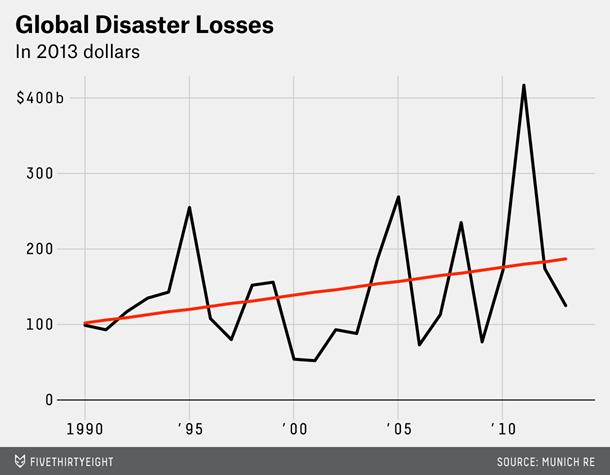
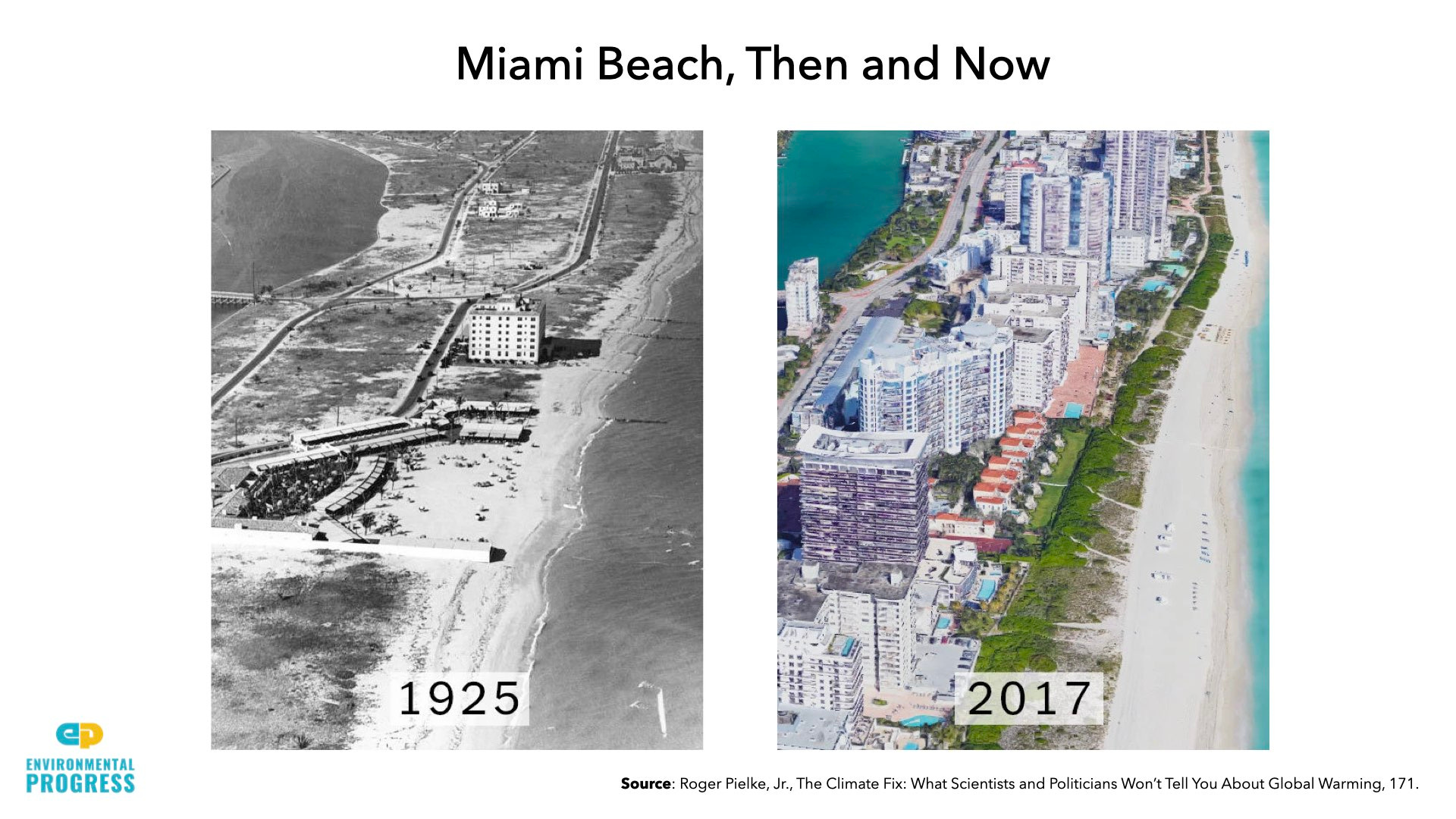
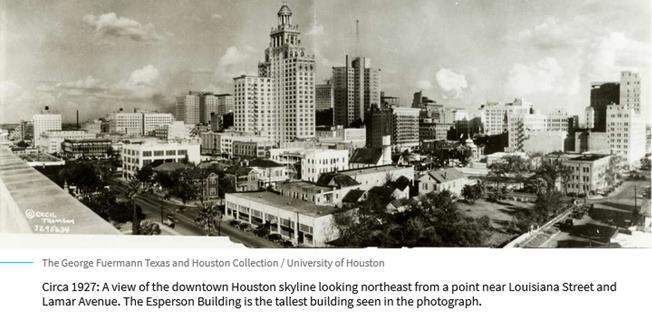
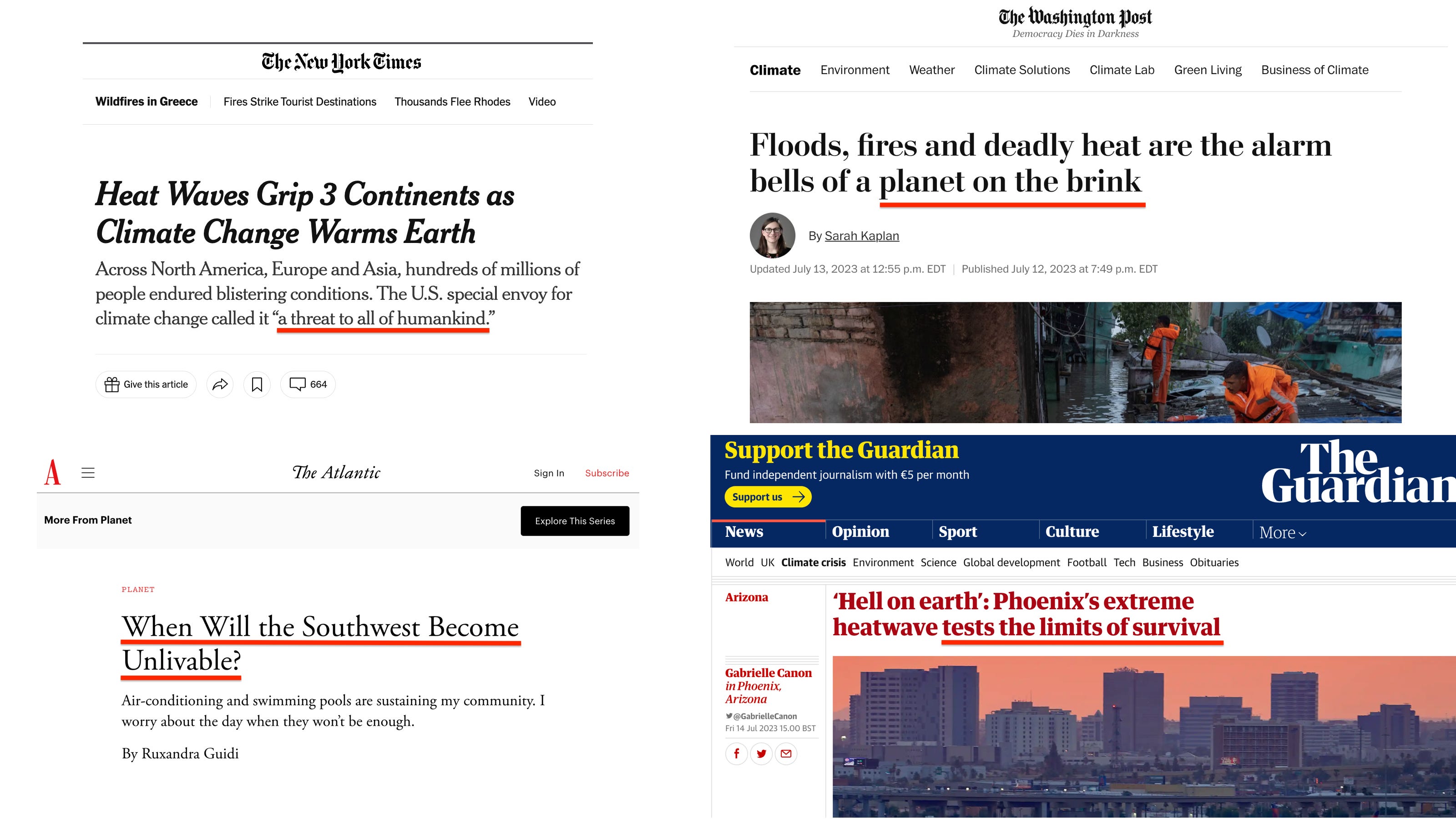
·         There is a major push to worship the planet, e.g., save Mother Earth from “you-name-it, they’ll claim it”: global warming[3], global cooling[4], etc.


·         There is constant pressure to refrain from speaking the truth for fear of not fitting in with the globalists’ agenda.

In short, all of the things which foster man’s efforts to serve God well and save his soul are being attacked and undermined in our current times. 

Let us fight back against these attacks of the enemy by:

Ø  Getting informed and staying informed;


Ø  Uniting ourselves to the will of God;

Ø  Praying for the triumph of the Immaculate Heart;

Ø  Being resigned to the Providential Will of God;

Ø  Praying with gratitude to God for enlightening us about the evils and dangers that surround us;


Ø  Praying for fortitude to withstand the attacks of the enemy and to be willing to die for the sake of truth if God should so will this for us;

Ø  Offering up sacrifices and penance to make reparation for all the evils of our times;

Ø  Praying for the conversion and the fortitude of the Pope, the hierarchy, and the world; and

Ø  Praying for each other, dear fellow-readers of the Catholic Candle.

What We Hold

Striving for Complete Trust in God

If our doctor tells us to take a cancer-screening test and we are even slightly anxious that the test results might show we have cancer, then we don’t trust enough in God, that whatever the test’s result, it is for our good.

Words to Live by – from Catholic Tradition


The Great Value of Withstanding Temptations


Fire tempers iron and temptation steels the just.  Often, we do not know what we can stand, but temptation shows us what we are.  Above all, we must be especially alert against the beginnings of temptation, for the enemy is more easily conquered if he is refused admittance to the mind and is met beyond the threshold when he knocks.


Imitation of Christ, Thomas à Kempis; Book I, Ch. 13.

Life’s Spiritual Road Without a Priest

Catholic Candle Note: The article below is one man’s account of his fight for Catholic Tradition throughout the decades, as this fight was punctuated by periods (including the present) when he had no priest because of his refusal to compromise.

My family and I have carried the cross of having no priest on multiple occasions throughout the decades as we strive for salvation. 

We were without a priest the first time after the Second Vatican Council in the 1960s.  Mercifully, it didn’t last too long as we found a few uncompromising “independent” priests and then, later, the Society of St. Pius X came to America. 

Before Archbishop Lefebvre brought his fledgling Society, we had what we called family “meetings” with our children, to explain why we didn’t attend the local church but why we still dressed in our Sunday best to read the Mass prayers at home.  It was all part of training them to know and retain traditional Catholic morals and virtue. 

However, many others accepted the Liberalism and Modernism and said Our Lord will understand if they went along to get along.  (No, Our Lord will not understand!)  He expects us to cherish our Faith and do our best to keep it perfect as Our Lord intended.  He knows what we need and will always provide it.  But we have to understand and use what He provides for happiness on earth, and greater happiness in Heaven.

But sadly, after the Archbishop died, the SSPX gradually became more and more liberal and we had to leave the “new” SSPX in September of 2015.  We were still able to find uncompromised Masses for another three years, although not every Sunday.  Thus, we have been without a priest for the past five years. 

The question is how are we managing to stay on track and profit in the spiritual life for our salvation?  Well, I’ll tell you.

As you know, only saints go to heaven.  So, we must become saints to go there.  We must love God and not sin.  Plus, we must live our life preparing for our personal judgment by Christ, during which every one of our thoughts and actions will be judged.  We must develop such a great love of God that any sacrifice we must endure is a joy, and to sin is unthinkable.

To increase our love for God, we should study the life of Christ and increase our understanding of what He has done for us.  He created us.  He keeps us in existence.  He came to earth and suffered and died for us.  He now gives us both actual grace and sanctifying grace in order to make us happy on earth, and after death, happy with Him in Heaven forever.  Wow!  What a gift!

So, we must not sin – not even a venial sin.  This is not as hard as it sounds when a person loves God greatly.  We feel the responsibility for our salvation much more keenly now.  We wouldn’t even want to fall back on our previous sluggish practice of our Faith, such as misusing the old “Saturday afternoon Confessions.”  My impression living back then, is that the Saturday Confession was taken advantage of – many “Sunday Catholics” had a “good time” amidst the voluntary occasions of sin, thinking that they would just go to Confession Saturday, and that “would take care of” what they chose to do the evening before.  “No problem”, they thought.

But now we begin to understand that this newer, closer relationship with God cannot depend upon going through a priest and receiving the Sacraments.  We now understand better that our salvation hinges about us and what we do.   

This is not the first time that large numbers of souls have been without a priest and the Sacraments.  Japanese Catholics suffered through 300 years of spiritual aridity, without the sacraments. 

We are being tested to prepare for Eternity.  We must refuse to accept Liberalism and Modernism although “everyone else” accepts them. 

The longer I live, the more I realize that the “misfortune” God sends us turns out to be a “life saver” toward our goal of salvation.  He knows best. 

We must use Advent and Lent for the spiritual strength we need in the fight against evil. 

Hang a picture of Our Lord in your home and foster devotion to His Sacred Heart in order to obtain the promises of Our Lord.  (Although these Promises were published in Catholic Candle recently, they are so important that we should remind ourselves about them again now)

The Promises of Our Lord
To St. Margaret Mary for Souls Devoted to His Sacred Heart

1.    I will give them all the graces necessary for their state of life.


2.    I will establish peace in their families.

3.    I will console them in all their difficulties.

4.    I will be their secure refuge during life, and more especially at the hour of death.

5.    I will shower down abundant blessings on all their undertakings.

6.    Sinners shall find in My Heart a Source and boundless ocean of Mercy.

7.    Tepid souls shall become fervent.

8.    Fervent souls shall rise speedily to great perfection.


9.    I will bless every place in which the picture of My Sacred Heart shall be exposed and honored.

10. I will give to priests the power of touching the most hardened hearts.

11. Persons who propagate this devotion shall have their names written in My Heart, and they shall never be effaced therefrom.


12. I will grant the grace of final repentance to all those who shall communicate on the first Friday nine months consecutively.  They shall not die in mortal sin, nor without having received the last Sacraments, for My Divine Heart will become their secure refuge at that last moment.

What else should we do?  Start reading each night a religious book such as Lives of the Saints, or Trustful Surrender to Divine Providence, etc.  

Of course, praying the 15 decades of the Rosary daily is a great way of becoming closer to Our Lord and His Blessed Mother. 

You will learn to talk to Jesus many times during the day as you would with a good friend Who always has the wise answer to your daily problems.  You should seek uncompromising Traditional Catholic friends when possible. 

Don’t forget our Guardian Angels who are given to us by God to preserve us from the many serious dangers in life.  We should converse with our angels; ask for their help.  They want to help us to fulfill God’s plan for us. 

Finally, we can receive great strength by frequently and devoutly reciting three prayers: 1) the Our Father; 2) the Apostles Creed; and 3) the Spiritual Communion.  St. Augustine stated that praying devoutly the Our Father will gain forgiveness for venial sins.

A final word: Be Patient.  The Sacraments will be provided when God wills it.  Meanwhile, we must stay strong and fight for Christ the King!


Recollections of the Earliest Days of the “Changes”

Catholic Candle Note: The article below is one wife’s account of the early days of her family’s fight for Catholic Tradition after Vatican II.

When We First Began to Suspect Big Trouble Was Brewing in the Human Element of the Church (Early ‘60s)

Early in our marriage and “babies” stage, my husband and I used to take turns going to Mass every weekday.  With five children under the age of six, one of us had to stay home, of course.  We were in St. Edward’s parish on the southside of Racine, Wisconsin, and we began to find that the church was not always open when we arrived for early Mass.  Or sometimes the correct side door was still locked.  Or one of the young priests was late, not exactly conducive to encouraging Mass attendance.   Eventually, the early Mass was canceled “due to poor attendance,” they explained. 

Meanwhile, minor, and seemingly unimportant changes were creeping into the Mass, e.g., St. Joseph was now mentioned in the immemorial Canon of the Mass.  But it was said: “who could object to good St. Joseph being honored like that?”  I distinctly remember thinking, “Well, I don’t like [this or that], but if that’s the way it has to be, I’d better get used to it.”  (However, we soon learned to be more vigilant and not so ready to accept changes.)

At this time, we had a venerable monsignor for our pastor, with two young assistant priests, who were the same ones who dragged their feet providing the early Mass.  The old monsignor was to celebrate his silver jubilee, and the parish was giving him the gift of a trip to Hawaii.  The way it worked was that while he was gone on his trip, a certain cabal of parish liberals went to the bishop and convinced him to retire the monsignor.  Thus, one of the younger priests replaced him.

We invited this new pastor to dinner to get an idea in what direction he would be leading the parish, and it became very clear, he wouldn’t be. He was planning to let the newly-installed nuns run things.  And this was in the day when radical nuns were first leveraging their power in order to take control.

So, we had to leave St. Edward’s, where innovations to the Mass started increasing, and it was announced that a new mass would be coming.  It was evident that this new mass would not be Catholic but that it would be an implementation of the modernism that had been implanted at Vatican II.  Therefore, we saw that we could have nothing to do with this new mass. 

The new mass was promulgated for use beginning the First Sunday of Advent, 1969.  In late November 1969, the parish priest at St. Edward’s announced that the following Sunday, he would begin using the new mass, instead of the Traditional Latin Mass. 

That was Providence’s sign for our family to make its move.  When we returned home after this announcement, my husband called a “family meeting” and explained to our children that there was a protestantized service which was going to be used at St. Edward’s starting the following Sunday.  He explained that, for the love of God and in order to keep the true Catholic Faith, we would not be attending it nor would the family return again to St. Edward’s.

We learned somehow that a small ethnic parish near downtown Racine was still allowing the Latin Mass, so we began the next Sunday to attend St. Casimir’s regularly.  Before too long, there were a few dozen other new faces in the congregation, as word got around that this parish had the Traditional Mass.   

St. Casimir’s was a Lithuanian parish in an older part of town.  This is the church that my husband had discovered to be the place to which we could “flee”.  It was a beautiful old structure, with towering dark woodwork making up a large altar backdrop.  In this woodwork there were little niches in which were placed about a dozen statues of saints.

At St. Casimir’s, the parish priest saw that the new mass was a bad thing and he resisted its implementation.   For the moment, things were good.

Probably “too good”.  St. Casimir’s pastor was not as “strong as steel”, although for a while he made excuses for not using the new mass.  The months went by.  But it became evident that the pastor of St. Casimir’s was not strong enough to continue withstanding the pressure of the bishop to use the new mass.

The tiny parish was suddenly being visited by younger priests, to “help out”, at the bishop’s direction, one of whom sticks in my mind.  On a feast of our Blessed Mother, he gave a sermon comparing her in a worldly way to a popular actress(!), Raquel Welch, and I remember we were sitting there outraged at this insult to Our Lady, and very nearly walked out of church.  Well, that was the beginning of the end for St. Casimir’s. 

Very soon, the unwanted attention from the archbishop of our diocese spelled the end of the Latin Mass at this small Lithuanian hold-out parish.  We tried talking the little Lithuanian priest into hanging on to it, and though he surely agreed silently, he must have been pressed hard by the diocese to give it up.

Then on Passion Sunday 1970, he announced that the following Sunday the parish would start using the new mass. 

Because St. Casimir’s was apparently wavering in the weeks before that, my husband and I planned where our family would have to “flee” next.  On Palm Sunday 1970, we did not return to St. Casimir’s but drove to Milwaukee and attended St. Michael’s, which was a Byzantine (Eastern Catholic rite) Catholic church.  We, especially our children, found the Byzantine Mass surprising and strange.  Although it was Palm Sunday, there were no palms.  Instead, the Mass included the blessing of pussy willow branches, which had no leaves but only the grey fuzzy oblong “balls” at the tips. 

Also, strange to our children, the priest distributed Holy Communion under both Species.  The Blessed Sacrament which the priest took from his ciborium was leavened cube Hosts, soaked in the Precious Blood.  The priest used a little gold spoon to carefully pour the precious Species into the uplifted mouth of each communicant.

Our children trusted us, their parents, and “took it all in” as something strange but which was part of our life now.  Ever after this day – even decades later – our children refer to this Palm Sunday as “Pussy Willow Sunday”.

After Mass, we were talking with the parishioners of St. Michael’s.  My husband was discussing with the men of the parish what was going on at the Roman rite parishes.  The men from St. Michael’s seemed uninterested in the on-going conciliar revolution.  If the positions had been reversed, and if these men had come to our original parish (St. Edward’s) telling my husband about the on-going revolution coming to our parish, he would have “hung on every word” they said.  But no.  These men were as uninterested and as unalarmed as the average parishioner at St. Edward’s had been. 

In any event, one of them remarked that a few miles away there was a Roman rite parish, St. Lawrence’s, with a conservative pastor who continued to offer the Traditional Mass every Sunday.  My husband got directions and we went there beginning the following Sunday.

The good Lord had provided us with this wonderful next step.

When we were at St. Lawrence’s, we did “have it all”: the true Mass, a beautiful church, magnificent organ, wonderful choir, and strong sermons.  Sigh!  This fortuitous situation continued for some years, enough time that we were able to see all of our five children make their First Communions. 

However, at some point, my husband began to have a nagging doubt whether it was the right thing to do to attend the Mass of a priest who said the (sacrilegious) novus ordo mass once a month because the bishop insisted.  No amount of wishing could rationalize away that compromise.  And so, in 1976, we left St. Lawrence and all of our traditional friends, for the love of God and His Holy Faith. 

In the following years, we found ourselves tracking down the good Traditional Masses whenever and wherever we could find them without compromise: a hotel ballroom, a priest’s basement, an empty dancehall, a country church, a veterans’ home, a priest’s lakeside cottage, a nursing home, etc.  We reminded ourselves when we were hearing Mass in humble surroundings, that the setting wasn’t the most important consideration; the Mass itself was.  

In those periods, sometimes we had no Mass to go to, and our family read the Mass prayers at home, all of us dressed in our Sunday best to train the children to dress as traditional Catholics should.  My husband fulfilled the father’s duty of giving a short talk in lieu of a sermon.  While sanctifying the Sunday in this way seemed less satisfactory to us, it was clearly God’s Will for us.

Eventually, after having been without Mass for about 3-4 months, we heard that the priest who had been at St. Lawrence (Fr. Hugh Wish) had left that parish and was now offering exclusively the Tradition Mass, at various other venues.   This is when Fr. Wish began offering Mass in the large room of a dancehall near Oconomowoc, WI, more than an hour’s drive from our home.  But we were happy to travel so that we could again attend Mass! 

Shortly after that, we heard that Fr. Wish had become pastor of St. Pius V’s church at Mukwonago, a town west of Milwaukee.  This church had been owned by the diocese and was for sale.  The diocese refused to sell it to Catholics for fear that it would be used for the Old Mass.  So, some Traditional Catholics, guided by Fr. Wish, paid a black protestant minister to buy the church building and then transfer title to them.  It was so good to have a parish again!

But, as we were learning, earthly things are transitory, and Father Wish’s death in 1979 eventually brought the Mukwonago chapel under the auspices of the Society of St. Pius X.  Archbishop Marcel Lefebvre had begun this priestly society in Switzerland in 1970, and it eventually came to the United States.  It was a godsend, and we were so fortunate to benefit from the Archbishop’s good work. 

Under his wary eye, the SSPX fought the good fight opposing modernist Rome, which was trying to gain control of the Society.  He was a magnificent non-compromiser and kept the SSPX firmly on the right track.  That is, until he died.

Before his death, however, Archbishop Lefebvre consecrated four bishops in 1988.  They made no abrupt, jarring changes, and life went on.

It wasn’t, probably, until we were in the new century that an occasional SSPX news release or action began to raise a few eyebrows.  However, midway through the second decade we began to notice troublesome statements from the Society coming more frequently and getting harder to explain.  By 2015 we could no longer remain with the Society and were forced to leave.

We now have no Mass or priest, out of love for Our Dear Lord.  This will not change until He wills it to change.  We wait patiently, dear Lord, content with Thy Holy Will.

Marylike Neckline Modesty

A Brief Consideration of One Requirement for Marylike Modesty

Here is one requirement of modesty for women and girls:

Marylike dress requires full coverage for the bodice, chest, shoulders and back; except for a cut-out about the neck not exceeding two fingers’ breadth below the neckline in front and in back and a corresponding two fingers’ breadth on the shoulders.


Quoted from the Decree of Pope Pius XI, 12 January 1930, through his Sacred Congregation of the Council.


Catholic Candle note: Here we focus on one aspect of proper clothing for the upper body – which is only one of many conditions required for fulfilling the Catholic standard of Marylike modesty for women and girls.  Catholic Candle will write about the Catholic standard for skirts/dresses and other aspects of modesty in future articles.


Please note the following nine consequences that flow directly from the above Catholic requirement of Marylike modesty:

1.    This standard is not declared to be the ideal, but rather is the minimum to avoid sin.  It is certainly a spirit contrary to the love of God and to the love of virtue for a Catholic to try to “get as close to sin as possible without crossing the line into sin”.  Thus, a Marylike spirit of modesty would not aim merely at the minimum modesty requirement as if it were the ideal.
 

2.    This neckline standard applies all the way around a woman’s or girl’s neck, not only in front.

3.    This standard requires clothes that stay in place so that they do not exceed this neckline condition.  Clothes are immodest if a woman or girl must “constantly fix” them because they keep slipping in one direction or another and thereby reveal more than is modest.

4.    This standard requires clothes that maintain this minimum neckline modesty and do not reveal more even when she is bending or leaning forward.

5.    This standard also applies to photographs, paintings, and statues, whether the woman or girl who is depicted is known or unknown.  It would obviously be illogical for a woman to carefully dress modestly herself but also to promote or display scandalous art on her wall (or scandalous pictures of her relatives hung with magnets on her refrigerator, etc.).  For the very same reason that she is forbidden to dress this way, a Catholic is forbidden to promote or display such immodest images.


6.    This standard is not dependent upon the weather, because hot weather does not justify the sin of immodesty.

7.    This standard does not change based on the activities in which the woman or girl is engaged.  Catholic modesty does not have an exception for swimming or athletic pursuits.


8.    Parents, especially fathers, have a duty to guide the women and girls under their care and enforce this Catholic standard of modesty.


9.    Parents, especially mothers, have a duty to guide their daughters not only to comply with this Marylike neckline standard (and other aspects of modesty), but to love modesty.

One final consideration: We live in pagan times.  Let us beware of rationalizing immodesty by saying that this standard of Marylike modesty is old fashioned and that we live in modern times where the requirements of modesty are weaker.  Here is Pope Pius XII’s warning against this excuse:

The most insidious of sophisms, which are usually repeated to justify immodesty, seems to be the same everywhere.  One of these resurrects the ancient saying “let there be no argument about things we are accustomed to”, in order to brand as old fashioned the rebellion of honest people against fashions which are too bold…


Pope Pius XII, Address to the Latin Union of High Fashion, November 8, 1957.

Conclusion

Let women and girls love to always dress with Marylike modesty! 

Let men and boys appreciate, admire, and defend women and girls who dress modestly!

Lesson #22 – The Trials of the Holy Family

                    Mary’s School of Sanctity                   

Lesson #22 – The Spiritual Exercises of St. Ignatius – SECOND WEEK – THE 3rd, 4th, and 5th CONTEMPLATIONS – THE TRIALS OF THE HOLY FAMILY

St. Ignatius has the exercitant study Our Lord’s life in detail.  

St. Ignatius tells us to repeat the first and second contemplation and use these as our third and fourth contemplation.  However, in his fifth contemplation/meditation, he wants the exercitant to put as much of his five senses into the imagining of the circumstances and scenes as possible.  St. Ignatius tells us that just as we use our imagination to see and hear the subjects of our contemplation, we should now try to use our sense of smell, taste and touch as well.  How do we do this in our imagination?  He tells us to smell the infinite fragrance and taste the sweetness of the Divinity, and the virtues of the persons of whom we are contemplating.  Also, he suggests to us to use our sense of touch by ‘walking’ in the places of the persons we are contemplating about and likewise to embrace and kiss the venerable places we are visiting in our imagination during these contemplations.   In this way, St. Ignatius wants us to draw more and more fruit out of each meditation.  He wants us to make many considerations from pondering Our Lord’s Life so we can come to conclusions and thereby imitate Our Lord better.

For our purposes here, we will endeavor to set up the contemplations in the similar manner that we used in the first two contemplations of the Incarnation and the Nativity.  We encourage the reader to include his other senses by applying his imagination as St. Ignatius suggests above.  Then the Spiritual Exercises become our personal pilgrimage into the Life of Our Lord as we follow in His Footsteps and make our study of His Virtues in His Hidden Life and then later on in these Exercises for His Public Life.

We must keep in mind that St. Ignatius has set out the Spiritual Exercises to be done over a period of a month with the different meditations to be done in various times during the day and some of them to be actually done during the night.  However, for our treatment of the Exercises here, we intend to give the substance of the various meditations and the reader, being the exercitant, can plan his schedule to do the Exercises when he sees fit.

So, in the second week of the Spiritual Exercises we can see how St. Ignatius has us go through several scenes of Our Lord’s Life.  We can take topics from the Gospel of Our Lord’s Life before He began His Public Life.  For this particular lesson we will set out the contemplation/meditation of the Trials of the Holy Family.  Of course, a separate meditation could be done on each of the Trials.  We will consider the Flight into Egypt, the Return from Egypt and the Finding of the Child Jesus in the Temple.  First, we will set out the topics in the same manner St. Ignatius gave us for the Incarnation and Nativity.  Then we will give the actual Scriptural accounts of these three trials and lastly, we will give some possible considerations one could use when meditating on these trials.  Thus, this lesson will be basically the substance of three separate meditations given one after another.


The Flight into Egypt

The preparatory prayer is the same as usual, I ask God Our Lord the grace that all my intentions, actions, and works may be directed purely to the service and praise of the Divine Majesty.

The FIRST PRELUDE: I will to recall to mind the history of the subject I am about to contemplate.  Here it will be how the Holy Family had to flee to Egypt in order to save the Life of Our Lord who was threatened at the hands of Herod.  

The SECOND PRELUDE: I will ask for the grace that I desire.  Here I will ask for an intimate knowledge of Our Lord, Who wants me to imitate Him, that I may love and follow Him better.  I also will ask for the grace that I may follow the holy examples of Our Infant Lord, Our Blessed Mother, and St. Joseph, the foster father of Our Lord.

The FIRST POINT: First, I will SEE the three kings making inquiries about the birth of Our Lord, the King of the Jews.  I will likewise SEE Herod’s reaction and the events surrounding the visit of the three kings to the King of kings.  Then I will SEE how, after being warned in sleep, the kings took a different route back to their native lands.  I will SEE the angel warning St. Joseph in his sleep to flee.  Immediately following this, I will SEE St. Joseph awaking Mary and the Holy Family fleeing immediately.  I will SEE how Herod is incensed with anger when he perceived that he was fooled by the holy kings.  Further I will SEE the results of Herod’s rage.  I will SEE the Holy Family all during their exile in Egypt, their journey there being sorrowful while they know many innocent little ones will be murdered as substitutes for the Infant King, etc.

The SECOND POINT: I will HEAR the excited and troubled crowds witnessing the coming of the foreign kings.  I will HEAR the hurried confusion of the people as the soldiers hunt down the infant boys two years old and younger.  Especially I will LISTEN to the wailing and lamenting as Herod’s soldiers butcher all of the Holy Innocents.   

The THIRD POINT: I will CONSIDER the actions of St. Joseph and Our Lady.  I will consider the angel telling St. Joseph in his sleep what God’s will is for him and the Holy Family.  

The COLLOQUY: I will now think of what I should say to the Infant Jesus, St. Joseph, and Our Lady.   I will ask help according to the need that I feel within myself, so that I may more closely follow and imitate Our Lord Who as an Infant is already suffering the malice of His creatures and has just fled into Egypt as an exile from His homeland.  I will close with the “Our Father” 

Let us begin by reviewing the Scriptural Text regarding this event.  [These verses are from St. Matthew 2:1-18]

When Jesus therefore was born in Bethlehem of Judah, in the days of king Herod, behold, there came wise men from the East to Jerusalem, saying: Where is he that is born king of the Jews? For we have seen his star in the East, and are come to adore him.

And king Herod hearing this, was troubled, and all Jerusalem with him. And assembling together all the chief priests and the scribes of the people, he inquired of them where Christ should be born.  But they said to him: In Bethlehem of Judah. For so it is written by the prophet:  And thou Bethlehem the land of Judah art not the least among the princes of Judah: for out of thee shall come forth the captain that shall rule my people Israel.

Then Herod, privately calling the wise men learned diligently of them the time of the star which appeared to them; And sending them into Bethlehem, said: Go and diligently inquire after the child, and when you have found him, bring me word again, that I also may come and adore him.

Who having heard the king, went their way; and behold the star which they had seen in the East, went before them, until it came and stood over where the child was.  And seeing the star they rejoiced with exceeding great joy.  And entering into the house, they found the child with Mary his mother, and falling down they adored him: and opening their treasures, they offered him gifts; gold, frankincense, and myrrh.

And having received an answer in sleep that they should not return to Herod, they went back another way into their country.  And after they were departed, behold an angel of the Lord appeared in sleep to Joseph, saying: Arise, and take the child and his mother, and fly into Egypt: and be there until I shall tell thee. For it will come to pass that Herod will seek the child to destroy him.

Who arose, and took the child and his mother by night, and retired into Egypt: and he was there until the death of Herod:  That it might be fulfilled which the Lord spoke by the prophet, saying: Out of Egypt have I called my son.

Then Herod perceiving that he was deluded by the wise men, was exceeding angry: and sending, killed all the men children that were in Bethlehem, and in all the borders thereof, from two years old and under, according to the time which he had diligently inquired of the wise men.

Then was fulfilled that which was spoken by Jeremias the prophet, saying:  A voice in Rama was heard, lamentation and great mourning; Rachel bewailing her children, and would not be comforted, because they are not.

Considerations for the FIRST POINT: to use the sense of sight:

·          SEE all of Jerusalem being disturbed because of the entourage of the three kings.  They do not know what to do about these kings.

·         SEE how upset Herod is.  He cannot rest until he has removed all perceived ‘threats’ to his throne.

Let us set out some background facts and briefly see the events.  Then we will add more details as we describe what we would hear and the actions we should consider.

We must keep in mind that Herod is not a Jew and he was the first foreigner to be appointed king of the Jewish nation.[1]  With fallen human nature it is easy to see why Herod was anxious not to lose his position which was given him by the Romans. 

Also, it is sad to consider that the people were not enthused to have their Savior born.  Scripture says that all Jerusalem was troubled along with Herod.  We must not forget that these poor people were not informed properly by their leaders and were not given good examples of piously awaiting the Messiah.

The three kings came with their train of servants and camels.  They had been studying the heavens and had been following a very unusual star.  Providence had the circumstances be such that the kings who had been following this star for such a long distance, now lost the star and therefore believed that they needed to make inquiries of the local king.  Providence knew that Herod would get upset by their news of what they had seen and were now seeking.  Indeed, God wanted Herod to know this information because God knew that Herod would become enraged in his jealousy and ruthlessly seek to kill the first Martyrs in the New Testament – the Holy Innocents.

The star then appeared again and pointed the kings to the house where the Infant King was.  Of course, the three kings did not hesitate to pay homage to the Messiah of mankind.

We can imagine the kings adoring Our Infant Lord and giving His parents gold, frankincense, and myrrh.  The Blessed Mother and St. Joseph know the significance of three precious gifts: Gold to honor the Divine Royalty of Our Lord; frankincense to adore Him as their God made Man; and myrrh to prepare Him for His redemptive Sacrifice.  

Upon leaving to return to their respective native countries the three kings were warned in a dream not to return to give Herod any information regarding this Holy Infant.  Also, St. Joseph was awakened by an angel and told to flee at once in order to rescue Jesus from the hands of a jealous earthly king, namely, Herod.

We watch in our imagination as St. Joseph meekly awakens Mary to tell her they must depart at once.  We can observe them gathering what few possessions they have and leaving quickly.

Imagine the scene as the Holy Innocents are butchered.  See the bloody swords of Herod’s henchmen, his soldiers, carrying out his attempted Deicide.

Considerations for the SECOND POINT: HEAR the people conversing in excitement about the kings being in town.  They are disturbed about the rumor that these kings are seeking the King of the Jews who has now been born.  These people are not interested in the King of kings.  Hear also what the angel is telling St. Joseph.  Then try to imagine what St. Joseph is telling Mary.

Imagine the hubbub and noise in the small town where gossip spreads quickly.  The crowds were naturally curious about the foreign kings that arrived.  When they heard the three kings were seeking a new king of the Jews, they were bewildered as to what this could mean.

Contrast in your imagination this confusion with the sweet and respectful visit the three kings made to Our Infant King.  Perhaps there was not much conversation but surely devout reverence was paid to Our Dear Lord, for Scripture tells us that they fell down and adored Him.    

Imagine the angel giving St. Joseph the urgent warning about the threat to the life of the Divine Infant.  

Imagine St. Joseph gently waking Mary and telling her of the warning of the angel.  They do not speak much but make all haste to get away.

As the Scripture tells us, after the three kings were informed by the angel to not revisit Herod, they decided to return to their native lands by a different way.  Herod, because he was a vicious man, began to suspect that the three kings deceived him.  He was in a fury!

Imagine his angry outburst to his court and soldiers as he ordered that all the male children two years old and younger should be killed in Bethlehem and in all the surrounding areas.  He wanted to take precautions because he wanted absolutely no rivals for his throne.

We can also imagine the great lamentations that occurred in all those homes where this massacre of the Holy Innocents occurred.  The soldiers grabbed the little ones out of the arms of their wailing mothers.  What must it have been like for all those women when they heard what was happening all over town and the countryside and then knowing and anticipating what awaited their own infant sons?  Imagine all those grieving mothers and fathers witnessing the horrifying death of their little ones.  Imagine their grief was made so much worse because they didn’t understand why Herod had commanded this dastardly thing to be done.

Considerations for the THIRD POINT: Consider of the Holy Family’s flight into a foreign land full of pagans.   Consider the Holy Family imagining the fury of Herod and murdering so many male infants in his blood-thirsty attempt to kill the Babe he perceived to be the rival to his throne.

Now we must put our scene together and consider all the actions of all of those involved.  Since we have painted the sights and sounds about Herod and the townsfolk so graphically above, we leave it to the exercitant to fill in the details in his imagination.  We now turn our thoughts more particularly to the Holy Family.

First, let us think about the terrifying escape in the night.  Then we will reflect upon some other aspects of the sufferings of the Holy Family.

While he was sleeping, St. Joseph received the command to leave.  He arose at once and was prompt in his obedience to the angel.  As Fr. Hurter puts it, “Yet in that very night St. Joseph rises at once and with a heavy heart wakes Mary who needed sleep.  God calls; that was enough for him to obey at once.”[2]

Fr. Hurter points out four basic, poignant aspects. 

But what consoled them, what comforted them?

a. The thought—it is the will of God; and that will they esteemed above everything.

b. The thought—our heavenly Father watches over us, guides and directs us.

c. The thought—it is done for Jesus to save His life; and for doing that no sacrifice was too great for them, no effort too much, no suffering too severe.

d. The thought – Jesus is with us.  The consciousness of this sweetened everything for them.  One look at the dear little infant Jesus and fatigue vanished and hardships were forgotten.  With this fourfold thought we also should try to console ourselves in our sufferings and little crosses.[3]

Yes, the danger was real and great.  If they tarry the Infant would be destroyed by Herod’s command.

This hasty departure into exile leads us to ponder another aspect in the fact that God wanted the Holy Family to suffer privations.  We can consider why Our Lord wanted to suffer still more and to practice poverty more strictly—to have to go to a foreign land and suffer still greater wants.  Oh, how Our Lord loves poverty! 

We must remember that St. Joseph left his carpentry work in Nazareth in order to obey the decree to go back to the city of David.  Hence, Our Lord was forced to be born in dire poverty in a stable.  And now the command comes for the Holy Family to leave their homeland and go into exile.  What an additional bitter cross!

Yet, Our Lord chose this cross for Himself and His parents so they could be an example for us of being completely detached from things of this world.  Plus, the Holy Family’s suffering is meant to teach us to trust in God’s loving Paternal care of us.  We must not complain but accept God’s Will no matter what comes.  We must work and do what we can but must also know that God will provide for us when we do His Will.

Therefore, St. Joseph did not murmur but accepted this cross which was a heavier one due to the fact that the future was unknown.  How should he get to Egypt?  He had never been there before.  It was the dark of night and very dangerous to be travelling to an unknown place and over dark, potentially thief-infested, roads.

Also, St. Joseph was a prudent planner for the future needs of his family.  He must have pondered what kind of carpentry prospects he would have in Egypt, as they hastily left Bethlehem to go there. 

We must bear in mind, too, that Egypt is a pagan country.  No doubt Our Lady and St. Joseph were considering the spiritual heartache that awaited them where Satan was worshipped in the form of idols.  This land of Egypt was full of foolish superstition and massive confusion.  Indeed, it is a land and people hostile to the descendants of the Israelites. 

Although St. Joseph and Mary must have wondered what they will do in such a pagan land, they humbly submit to God’s Will.  What heroic obedience!  What humble trust in God!

One additional heartache both Mary and St. Joseph must have suffered was the thought that Herod, being such a wicked man, would stop at nothing to get what he desired.  The angel did say, “For it will come to pass that Herod will seek the child to destroy him.”  In fact, Herod was truly capable of any sort of malice.  Most likely they knew Scripture predicted that there would be a mass murder of children in Rama.  Hence, Mary and St. Joseph would feel such compassion on all those families who would be afflicted by Herod’s malice.  They knew that those children were killed in the place of Christ.  They prayed for those families.

Concluding thoughts:

So, carrying their precious Bundle, Our Infant Savior, they flee as quickly as they can on the dark obscure road which leads to the foreign pagan land.  They are ready to accept whatever God has in store for them.  They cling to Jesus, knowing that they are rescuing Him, but also that He, as God, is holding them safely in His Hands.

The COLLOQUY:  Dearest Infant being swept away from Herod’s danger by Thy dear Parents, I thank Thee for such marvelous examples of charity, humility, and long-suffering.  Please assist me to imitate Thy virtues for I am so weak.

Dear St. Joseph, I thank thee for thine example of calmly doing thy duties.  Thou art such a model of leadership.  I want to follow thy example of complete resignation to the will of God.  Please intercede for me and guide me.

Oh, tender Mother Mary, I thank thee for thine example of complete submission to God through thy humble submission to St. Joseph.  I admire your patience in all the hardships that thou hast endured.  Please teach me patience in suffering.

Oh, Holy Family, help me work out my salvation.  Guide and protect me.

Oh, dear sweet innocent victims of Herod’s jealousy, you have spilled your blood as victims in substitution for Him Who in thirty-three years will shed His innocent blood for your Redemption.  How precious it is to me to ponder all of you waiting in the Limbo of the Fathers until the day when Our Savior brings you into heaven with Him.  Your precious martyrdoms are a hope for me.  Pray for me, oh Holy Innocents, for I am still a sojourner in this confusing world.


The Return from Egypt

The preparatory prayer is the same as usual, I ask God Our Lord the grace that all my intentions, actions, and works may be directed purely to the service and praise of the Divine Majesty.

The FIRST PRELUDE: I will recall to mind the history of the subject I am about to contemplate.  Here it will be how the Holy Family finding out that Herod was dead and St. Joseph being informed in a dream to settle in Nazareth.

The SECOND PRELUDE: I will ask for the grace that I desire.  Here I will ask for an intimate knowledge of Our Lord, Who wants me to imitate Him, that I may love and follow Him better.  I also will ask for the grace that I may follow the holy examples of Our Blessed Mother and St. Joseph, the foster father of Our Lord.

The FIRST POINT: First, I will SEE the Holy Family returning to their native country after having been in exile for some considerable length of time.

The SECOND POINT: I will HEAR what St. Joseph and Our Lady may be saying to one another.

The THIRD POINT: I will CONSIDER all of the hardships of this move back to Israel and settling anew in their native country. 

The COLLOQUY: I will now think of what I should say to the Child Jesus, St. Joseph, and Our Lady.   I will ask help according to the need that I feel within myself, so that I may more closely follow and imitate Our Lord Who has just returned from the sad exile in Egypt. I will close with the “Our Father”

Let us review the Scriptural Text for this next trial of the Holy Family.  [These verses are from St. Matthew 2:19-23]

But when Herod was dead, behold an angel of the Lord appeared in sleep to Joseph in Egypt, saying: Arise, and take the child and his mother, and go into the land of Israel. For they are dead that sought the life of the child.  Who arose, and took the child and his mother, and came into the land of Israel. 

But hearing that Archelaus reigned in Judea in the room of Herod his father, he was afraid to go thither: and being warned in sleep retired into the quarters of Galilee.  And coming he dwelt in a city called Nazareth: that it might be fulfilled which was said by the prophets: That he shall be called a Nazarene.

Considerations for the FIRST POINT: to use the sense of sight

SEE St. Joseph being informed in a dream again to return back to his homeland.

Fr. Hurter informs us that, “Despite all precaution, death soon put an end to the reign of Herod. He promised himself decades of years, but the vengeance of God soon overtook him.”[4]

The Church historian Bishop Eusebius tells us how Herod was struck by a sickness which consumed him.  He had a mild fever which corrupted his innards and gave him an overpowering desire for food, ulcers in his intestines and gangrene to his male organs which produced worms.  He eventually stabbed himself and, as he lay dying, he ordered the death of his third son, Antipater.  Upon giving this dreadful command he died instantly in agonizing pains.[5]  Truly a fitting end for such a vicious man!

St. Joseph was then informed again by the angel to make a journey – this time, back to Israel.  Imagine St. Joseph once again obeying the command of God, without murmuring and with promptitude.  He and Mary and the young Child Jesus gathered their few belongings and began their track back.  This meant that once more, despite any home they were able to make or carpentry business that Joseph had established, they leave all of that behind and start back to Israel.

They trusted in God when they left Israel, trusted Him the whole time they were in exile, and now they do not hesitate to trust in Him as they return.

St. Joseph being always cautious and prudent deliberated about where he should take his family to live.  He had heard that Archelaus, the son of Herod, was now ruling.  This made him wonder if living in Bethlehem would be safe.  The angel now instructed St. Joseph to settle in Galilee.

Now that we have painted the rough sketch of events, let us try to reflect on what was said.

Considerations for the SECOND POINT: HEAR what St. Joseph and Mary might say during their journey back with the young Child Jesus.

 St. Joseph tells Mary what he has learned from the angel of God.  She does not doubt St. Joseph and docilely prepares for their departure back to Israel.  They no-doubt would say prayers of thanksgiving that the danger from Herod is past.  So, they make their journey back in much quiet prayer and reflection.

Fr. Hurter gives us these words to reflect upon:

Mary and Joseph waited with patience and resignation in a strange land, until the angel came with the glad tidings: “Arise and take the child and his mother, and go into the land of Israel.”

Let us persevere in patience and resignation under the crosses which the Lord sends us, because he wills it, as long as He will it, and as he wills it. May the dear little infant Jesus breathe His spirit into us that after His example we must submit to trials, practice patience, and persevere for as long as He wishes.[6]

Considerations for the THIRD POINT: CONSIDER THE ACTIONS of the Holy Family as they fulfill God’s Will in returning to Israel, namely, settling in Nazareth in order to fulfill Scripture.

Let us now penetrate deeper into the hardship of having to move again.  St. Joseph, as the head of a family, knew how difficult it would be to basically have to start his business afresh.  It has been a long period of time since he and Mary departed Nazareth to travel to the town of David.  What would the people back in Nazareth think of the Holy Family?  Would they wonder why this couple never returned after the census?  This couple abandoned their tiny house and no one has heard anything about them.  The carpentry shop was abandoned too.  This was indeed very strange.

Then, suddenly, this couple returns with a young Child.  What would the townspeople think of this event?

And yet, St. Joseph and Mary accept all of the perhaps cruel gossip that had been told about them. They do not try to explain what has happened.  They would quietly set about picking up their former life in Nazareth.


Concluding thoughts:

What great admiration do we not owe to the Holy Family, for their fortitude and patience in all that God had sent to them!  We frail humans are so far from such resignation and virtue!  Instead, we wretched humans complain, so often, at least internally when inconveniences come our way.   So many lessons we can learn from the dear Holy Family!  They were extremely blest and also extremely tried.  God wanted them to grow in virtue and be a model for all of us.  How truly edifying they are!

They lived in want and poverty and strict obedience to the commandments of God.  It is as if we cannot have enough esteem for them!

COLLOQUY: With what an overflowing heart do I now address Thee, O Holy Child!  I see with what Providence Thy Heavenly Father has cared for Thee!  Help me O Divine Child to trust in God always.

Dear Holy Parents, teach me how to imitate thy trust in God and thy fortitude. When my life is full of trials, I will reflect how mine are nothing in comparison with yours. Guide me and teach me in all things.


The Finding of the Child Jesus in the Temple

The preparatory prayer is the same as usual, I ask God Our Lord the grace that all my intentions, actions, and works may be directed purely to the service and praise of the Divine Majesty.

The FIRST PRELUDE: I will recall to mind the history of the subject I am about to contemplate.  Here it will be how Our Lord’s Parents found Him in the Temple when He was twelve years old.

The SECOND PRELUDE:  I will ask for the grace that I desire.  Here I will ask for an intimate knowledge of Our Lord, Who wants me to imitate Him, that I may love and follow Him better.  I also will ask for the grace that I may follow the holy examples of Our Blessed Mother and St. Joseph, the foster father of Our Lord.

The FIRST POINT: First, I will SEE St. Joseph and the Blessed Mother bewildered when they discover that the Boy Jesus had stayed behind in Jerusalem.  I will accompany them as they return in their anguish to look for Him.

The SECOND POINT: I will HEAR what they may be saying and what the doctors in the Temple are possibly discussing with the Boy Jesus in the Temple.

The THIRD POINT: I will OBSERVE and CONSIDER what the Holy Parents are doing, suffering and their joy in finding their Divine Son in the midst of the Doctors. 

The COLLOQUY: I will now think of what I should say to each to the members of the Holy Family, starting with Our Lord, the boy Jesus, St. Joseph, the head of the Holy Family, and Our Dear Blessed Mother, the refuge of sorrowing parents who seek the salvation of their children.  I will ask help according to the need that I feel within myself, so that I may more closely follow and imitate Our Lord.  I will close with the “Our Father”

Let us review the Scriptural Text for this third trial of the Holy Family that we are studying in this lesson.  [These verses are from St. Luke 2:41-52]

St. Luke ch.2: 41-52

And the child grew and waxed strong, full of wisdom: and the grace of God was in him.  And his parents went every year to Jerusalem, at the solemn day of the Pasch. And when he was twelve years old, they going up into Jerusalem, according to the custom of the feast, and having fulfilled the days, when they returned, the child Jesus remained in Jerusalem. And his parents knew it not.

And thinking that he was in the company, they came a day’s journey and sought him among their kinsfolks and acquaintance. And not finding him, they returned into Jerusalem, seeking him.

And it came to pass, that, after three days, they found him in the temple, sitting in the midst of the doctors, hearing them and asking them questions. And all that heard him were astonished at his wisdom and his answers.

And seeing him, they wondered. And his mother said to him: Son, why hast thou done so to us? Behold thy father and I have sought thee sorrowing. And he said to them: How is it that you sought me? Did you not know that I must be about my father’s business?

And they understood not the word that he spoke unto them. And he went down with them and came to Nazareth and was subject to them. And his mother kept all these words in her heart. And Jesus advanced in wisdom and age and grace with God and men.

 Considerations for the FIRST POINT: I will SEE St. Joseph and Blessed Mary on their journey home and discovering that the Child Jesus is not among their kinfolk.  Also SEE them returning back to Jerusalem in haste to look for the Child Jesus.  SEE them entering the Temple and witnessing their dear Son discoursing with the wise ancients. SEE Our Lord meekly returning home with His parents. 

Before delving into the details of this trial of the Holy Family, there is some important background information to understand. We will allow Fr. Hurter to help us paint the scene.  Fr. Hurter tells us, “The hidden life of Our Lord was simple and uniform.  He passed His time in prayer and work.”[7]

The only change to their routine was the yearly visit to Jerusalem for the great holy days.  In fact, this yearly journey was a big sacrifice for the Holy Family.  We must be mindful that St. Joseph was faithful in keeping the law.  It should make a deep impression on us to remember how Our Lord did not exempt Himself from the law. Furthermore, we see how Mary also was zealous for the honor of God.  

Fr. Hurter has the following moving description of the Holy Family:

[This was] a real pilgrimage of prayer, silence and many privations.  Observe with what reverence they enter the temple, with what fervor they pray, with what heartfelt devotion they make the prescribed offerings.  Consider the sentiments which filled our Divine Savior, Mary and Joseph at their appearance before the Most High, and how long they persevered there in prayer until finally the time came for them to return.  Let us dwell on this touching sight for our edification.[8] 

An interesting comment that Fr. Hurter makes is that when the feast days were over, Blessed Mary and St. Joseph returned home with heavy hearts because they did not have the temple in Nazareth, and they loved this holy place so much.  This was how intensely they loved the service to God!

And so this heartache was with them yet another time.  However, this time they depart from Jerusalem, and without knowing it, they leave the source of all their love, the Child Jesus Himself, behind.

We see them travel “a day’s journey” (as Sacred Scripture says) and only then do they come to realize that the Child Jesus is not in the travelling group.  Of course, they hurry back to Jerusalem.

Then three days of anguish are their portion as they hunt for Him everywhere.  It is only after these days pass that they find Him in the Temple amidst the doctors. Imagine their delight at seeing Him and their amazement in hearing Him discoursing with these wise men.

His Mother speaks with Him briefly.  Then we see the Holy Family quietly withdraw and leave Jerusalem to head for home.  The Holy Son is subservient to His Mother and Foster Father.  We see Him ever meek and humble of heart.

Considerations for the SECOND POINT: HEAR what St. Joseph and Blessed Mary might say as they inquire everywhere concerning their dear Son.  HEAR the fascinating questions and answers that the ancients are discussing with the Divine Child.

Having set the scenes of this great trial of St. Joseph and Our Lady, let us spend some moments pondering the words spoken. What did the holy parents say to each other when at the end of the first day’s journey they met and realized that the Holy Child was neither of them?  They did not rebuke each other or blame each other for this mishap.  They soberly resolved to go back to Jerusalem.

They spend three days looking longingly for Our Lord.  We can well imagine them asking many people if they had seen a boy of Our Lord’s description.  Their sorrow grew with each answer in the negative.

Finally, they search one last time at the Temple, and this time they hear a Voice that they recognize—it is the Lord!  Imagine their surprise when they heard the doctors of the Law asking questions of Someone and the response of their young Son is heard in the room.  They look in the direction of the Voice and see the Child Jesus speaking in succinct answers explaining the Law and Scriptures to the group of learned men.  Imagine their delight at finding Our Lord safe.  They knew the Scriptures that the Son of Man must be put to death and yet they did not know when this would happen.  Recalling the horrific malice of Herod, perhaps they thought while they searched, that now might be the time that someone would try to kill the Child Jesus.  How very relieved they are that they found Him!

Listen to Our Blessed Mother as she asks, “Son, why hast Thou done so to us? Behold thy father and I have sought Thee sorrowing?”

This is not to be thought of as a complaint, but merely the anguish of her Immaculate Heart.  The words of Simeon have been echoing in her heart these three days, “And thy own soul a sword shall pierce, that, out of many hearts, thoughts may be revealed.”[9] Yes, God wanted her to feel this intense sorrow of having lost her Son so that parents who lament the loss of a wayward child would be all the more willing to fly to Holy Mary’s heart, begging the assistance of one who knew well this exquisite spiritual suffering. 

Then His reply to her question was not meant as a disrespectful rebuke to His Mother, but a statement of a fact about Providence. “How is it that you sought Me; did you not know I must be about My Father’s business?”

This mysterious answer shows that God’s Providence is often hidden from us but the faithful Mother will keep and treasure His Words in her heart, pondering them again and again.  She is not angry.  He is Divine and she is not.  His Father’s business must have been urgent and she humbly submits to the Divine Will.

Considerations for the THIRD POINT: CONSIDER THE ACTIONS of the Holy Family as they fulfill God’s Will in returning to Jerusalem to do their part to look for the Child Jesus.  Consider the surprise of St. Joseph and Blessed Mary when they find Our Lord in the Temple.  Consider their relief to find Him alive and unharmed. Consider the humility in which they heard the solemn words of the Child Jesus stating that He was doing His Father’s business.

At this point we will strive to appreciate the depths of Providence’s mysterious Plans.  By reviewing the events of this momentous trial, we can get a better view of this most distinguished couple of all human history.  Let us look at their actions and the actions of Our Lord to get a better understanding of the virtues possessed and which were augmented in this trial.  Not only did Providence send this suffering to St. Joseph and Blessed Mary, but He wanted us to study them and learn how to suffer the most grievous crosses humbly and virtuously.

Now is a fitting time to share some piquant points from Fr. Hurter.

In investigating why God manifested His Will in this way, we see clearly that God wanted St. Joseph and Blessed Mary to have these sufferings to teach us the following lessons as Fr. Hurter says:

But our Divine Savior, at the bidding of His Heavenly Father, remained in the temple without letting His mother and foster father know, although He foresaw their sorrow.  But when God calls, human consideration must be set aside, and we must not consult flesh and blood; we must make sacrifices.[10]

We can also believe that Our Lord did not concern Himself with either food or shelter on these three days.

 And yet another lesson about how Providence sometimes acts:

Consider furthermore how our Divine Savior withdraws even from good and pious souls without a fault of theirs, to their great sorrow.  He withdraws sometimes in punishment for venial sins, because of sloth that has crept in, because of too great attachment to creatures, with whom He does not wish to divide His rule.  And sometimes He withdraws, but for no fault whatever, as in the present case.  Neither Mary nor Joseph was to blame that the Child remained behind.  Why does the Lord withdraw even from holy souls so that they do not perceive His presence and feel entirely abandoned and disconsolate?  It is to try them; to give them opportunities for many good works, and to ground them more and more in virtue.[11]

Another lesson which applies to how we poor sinners should react to Providence:

When Mary and Joseph realize that Our Lord is not with them, “they search for Him among relatives and acquaintances, but they do not find Him.” So too, if the Lord withdraws from us and takes away His consolation, we shall not find Him among creatures, among flesh and blood, and in entertainments.  We must go back to Jerusalem, to the temple, have recourse to the tabernacle; there in prayer we shall find Jesus the Lord, our lost consolation.[12]

A further lesson showing Our Lord’s humility:

“What modesty does not our Divine Savior manifest?  He could have put the Scribes to confusion and made His superiority felt, but He did not step out of the role of a boy and only asked and answered questions.  Let us take to heart the significant words He spoke to Mary: “Did you not know that I must be about My Father’s business?”  That should be the program of the priest.  He should be intent on the honor of God, which he should try to promote everywhere.[13]

After Our Lord had complied with the extraordinary command of His Heavenly Father, He returned to the quite-hidden life of Nazareth. 

We too must do Our Heavenly Father’s business.  Let us ask our Divine Savior for light, grace, and the strength to follow God’s Will faithfully and to make it effective in our lives.[14]

Concluding thoughts:

Yes, indeed, God chastises those He loves.  We see that He loved St. Joseph and Blessed Mary intensely because He gave them the unspeakable dignity of being the parents of the Incarnate Word, and still, He gave them most painful crosses.  He wanted to not only give us valuable examples and models of Catholic marriage and parenting, but He also wanted St. Joseph and Blessed Mary to have more merits.  Therefore, He gave them the choicest crosses! 

COLLOQUY: Sweet Child Jesus, I thank Thee for Thy wonderful examples of humility and obedience to Thy Heavenly Father and to Thy earthly parents.  Help me to lovingly obey Thy commandments. 

O St. Joseph, model of husbands and fathers, I thank God for giving you to me.  Help guide us all, especially in imitating thy complete surrender to God’s holy will and trust in His Paternal solicitude for His children.

O my Mother Mary, thy heart pierced with the sword of sorrow lies open for me to see, and I cannot help being overwhelmed with thy tender mercy for thy children.  Keep filling our hearts with confidence in thy gentle care for us and God’s never-failing love for us.  Keep us faithful to Him and never allow us to abandon Him.

With the contemplations we have set forth above, there is plenty of material for the exercitant to do three separate Ignatian contemplations/meditations on these trials of the Holy Family.  In this important manner we can increase our knowledge of Our Lord and His virtues.  In our next lesson we will apply what we have learned about Our Lord when we set out to do the well-known Spiritual Exercise called the Meditation on the Two Standards.


[1]  This information is taken from The History of the Church, Book I written in 324 A.D. by the Church historian Eusebius, Bishop of Caesarea.

[2]               Considerations from Sketches for the Exercises of An Eight Days’ Retreat by Hugo Hurter, S.J., Ph.D., D.D., Professor Emeritus of Theology in the Catholic University of Innsbruck, copyright 1918; third edition, 1926, St. Louis, MO and London, Page 153.

[3]               Considerations from Sketches for the Exercises of An Eight Days’ Retreat by Hugo Hurter, S.J., Ph.D., D.D., Professor Emeritus of Theology in the Catholic University of Innsbruck, copyright 1918; third edition, 1926, St. Louis, MO and London, Page 154.

[4]              Considerations from Sketches for the Exercises of An Eight Days’ Retreat by Hugo Hurter, S.J., Ph.D., D.D., Professor Emeritus of Theology in the Catholic University of Innsbruck, copyright 1918; third edition, 1926, St. Louis, MO and London, Page 155.


[5]               This information is taken from The History of the Church, Book I written in 324 A.D. by the Church historian Eusebius, Bishop of Caesarea.

[6]              Considerations from Sketches for the Exercises of An Eight Days’ Retreat by Hugo Hurter, S.J., Ph.D., D.D., Professor Emeritus of Theology in the Catholic University of Innsbruck, copyright 1918; third edition, 1926, St. Louis, MO and London, Page 155


[7]              Considerations from Sketches for the Exercises of An Eight Days’ Retreat by Hugo Hurter, S.J., Ph.D., D.D., Professor Emeritus of Theology in the Catholic University of Innsbruck, copyright 1918; third edition, 1926, St. Louis, MO and London, Page 166.


[8]               Considerations from Sketches for the Exercises of An Eight Days’ Retreat by Hugo Hurter, S.J., Ph.D., D.D., Professor Emeritus of Theology in the Catholic University of Innsbruck, copyright 1918; third edition, 1926, St. Louis, MO and London, Page 166.

[9]    St. Luke 1:35

[10]            Considerations from Sketches for the Exercises of An Eight Days’ Retreat by Hugo Hurter, S.J., Ph.D., D.D., Professor Emeritus of Theology in the Catholic University of Innsbruck, copyright 1918; third edition, 1926, St. Louis, MO and London, Page 168.


[11]            Considerations from Sketches for the Exercises of An Eight Days’ Retreat by Hugo Hurter, S.J., Ph.D., D.D., Professor Emeritus of Theology in the Catholic University of Innsbruck, copyright 1918; third edition, 1926, St. Louis, MO and London, Page 168.


[12]         Considerations from Sketches for the Exercises of An Eight Days’ Retreat by Hugo Hurter, S.J., Ph.D., D.D., Professor Emeritus of Theology in the Catholic University of Innsbruck, copyright 1918; third edition, 1926, St. Louis, MO and London, Page169.


[13]            Considerations from Sketches for the Exercises of An Eight Days’ Retreat by Hugo Hurter, S.J., Ph.D., D.D., Professor Emeritus of Theology in the Catholic University of Innsbruck, copyright 1918; third edition, 1926, St. Louis, MO and London, Page169.


[14]            Considerations from Sketches for the Exercises of An Eight Days’ Retreat by Hugo Hurter, S.J., Ph.D., D.D., Professor Emeritus of Theology in the Catholic University of Innsbruck, copyright 1918; third edition, 1926, St. Louis, MO and London, Page170.

What We Hold


Let us make this resolution


We should always strive to make sure that everything we do, say, and think is what, at our Particular Judgment, we would wish we had done, said, or thought.


Cf., Spiritual Exercises of St. Ignatius of Loyola, Section: How to make a good choice, Second Way, Fourth Rule.


Words to Live by – from Catholic Tradition


Let us pray for things that are appropriate for us


St. Thomas Aquinas, Greatest Doctor of the Catholic Church, teaches us how to ask for what we should:


St. Augustine speaks against those who ask God for worldly honor, as follows:


When you ask for the things that God praises and promises to give, ask him with confidence, because God grants those things to us.  Yet if you ask for temporal things, ask with discretion, for God knows better than man whether things are good or bad for us.


Still, many ask God more freely for temporal than for eternal goods.  All such people ask in an indiscreet way, because it does not befit God to give such a small gift, just as it does not befit the King of France to give a dime.  


Or, God prefers not to listen to such people, because what they ask for is not salutary for them, just as he did not listen to St. Paul [when he asked God to be delivered from the sting of the flesh, 2 Cor. 12.7], and just as he does not listen to boys in schools asking that they not be flogged, because it is of no avail to them.


St. Thomas Aquinas, sermon Petite et Accipietis, preached to the faculty and students of the University of Paris, on the 5th Sunday after Easter.


The False Claim that Global Warming Causes Hurricanes to be More Severe – Part 1

Catholic Candle note: The globalists are seeking to grab power by frightening gullible people that there is a climate emergency that requires the globalists to save us by wielding totalitarian power for our own good.  https://catholiccandle.org/2019/12/22/the-baseless-climate-change/

These globalists falsify and deceptively use climate data as part of their scheme to alarm people with a supposed global-warming emergency.  In roughly the 1970s, the globalists tried (and largely succeeded) in alarming people by the scare of global cooling and the (supposed) coming of a “new ice age”.  https://catholiccandle.org/2022/10/25/recalling-a-1970s-climate-change-hoax/

The globalists use cyclical climate trends to alarm the people, as if the climate cycle was going to continue without end in the same direction.  In an earlier article, we examined the fact that the climate is naturally cyclical.  There are daily cycles, yearly cycles, decades-long cycles and centuries-long cycles.  Read this article: Climate Alarmists Abuse Data from Natural Weather Cycles: https://catholiccandle.org/2023/02/24/climate-alarmists-abuse-data-from-natural-weather-cycles/

The article below treats of a related topic, debunking the claims of the climate alarmists who assert that hurricanes are becoming more numerous and more severe because of man-made (anthropogenic) “climate change”. 

Part 1

The leftists seek to alarm gullible people (especially the young) by claiming that the current warming cycle (which the leftists call “global warming”) is harmful because this warming causes hurricanes to be more numerous and more severe.  This alarmism is false as we will see.

Just as the temperature goes in long and in short-term cycles, it would not surprise any thinking person that hurricanes go in cycles too.  There is an obvious annual hurricane cycle, because of which part of the year is called the “hurricane season”, especially in places such as the Gulf of Mexico.  Here is a NOAA (U.S. National Oceanic and Atmospheric Administration) graph of the annual hurricane cycle:

In addition to those annual cycles, hurricanes also follow decades-long cycles.  Below are some graphs showing such decades-long cycles.  The first one[1] is averaged to make the graph less “spikey”.  The second one[2] (the one from the U.S. E.P.A. i.e., the Environmental Protection Agency) is the non-averaged, “spikier” version of the first graph.  We see that both of them display a cyclical pattern that takes decades to repeat itself.

A graph showing the calculated number of Atlantic hurricanes

Line graph showing the number of hurricanes that formed in the North Atlantic Ocean and the number that made landfall in the United States each year. 

It would seem plausible that there would also be hurricane cycles that take centuries to repeat, just as there are centuries-long temperature cycles.[3]  But we have no information on that question, one way or the other.

Regarding these hurricane cycle graphs (above), notice that the U.S. E.P.A. graph refers to the pre-1972 data being “adjusted”.  The U.S. government began wide-spread use of weather satellites that year.  The U.S. government and academic researchers all adjust the pre-1972 data and they all agree that an upward adjustment is necessary because the pre-1972 data for hurricanes missed all hurricanes that did not reach landfall unless a ship at sea happened to see the hurricane.  It is reasonable and obvious to everybody that this pre-1972 tracking system missed many hurricanes and so the data is adjusted upward to account for this under-count in both government and academic records. 

Because hurricanes occur in cycles (like the weather more generally), this enables climate alarmists to manipulate the hurricane data to have it “prove” what they want.  So, e.g., “cutting” the data (i.e., starting their graph) at a low point allows the climate alarmists to claim that the upward slope of the normal hurricane cycle “proves” that there is an “alarming” hurricane increase (which they blame on a global warming emergency).

Although the government weather and climate services, as well as academia (university researchers) are controlled by the leftists, they cannot entirely avoid the truth that the climate data does not support climate alarmism.  So, when government or university reports dispel alarmist myths, those reports are “buried” and de-emphasized, all the while the leftist media, academia, and government agencies continue to insist on dire climate danger and the need for drastic reductions in human-caused carbon emissions.

One example of the truth coming out recently – but being “buried” – is a NOAA hurricane study that came out in October 2022.  Immediately below are NOAA’s conclusions regarding no trend in the strengthening of storms which would cause them to become major hurricanes:

After adjusting for changes in observing capabilities (limited ship observations) in the pre-satellite era, there is no significant long-term trend (since the 1880s) in the proportion of hurricanes that become major hurricanes.  We conclude that the historical Atlantic hurricane data at this stage do not provide compelling evidence for a substantial greenhouse warming-induced century-scale increase in frequency of tropical storms, hurricanes, or major hurricanes, or in the proportion of hurricanes that become major.[4]

NOAA provides the graph (below) of 160 years of data, adjusted to account for inferior sighting and tracking ability before 1972.  This graph, is called “figure 4” in the NOAA report.  The graph not only does not show an increasing proportion of hurricanes becoming major, but rather it shows greater proportions of hurricanes being major in the 1960s hurricane cycle (compared to now) and an even-greater proportion of major storms in the 1910-1930s cycle.  See below.[5]    

NOAA is telling us that the evidence shows cycles but shows no “significant long-term trend (since the 1880s) in the proportion of hurricanes that become major hurricanes”.  NOAA adds (in the quote above) that there is no “compelling evidence” that greenhouse gases cause more storms to become major hurricanes – although the climate alarmists insist the opposite. 

NOAA (despite being controlled by leftists) admits that the data does not support the supposition that there is an increase in the severity of hurricanes, once a person adjusts (as all the studies do) for the obvious under-count which occurred when hurricanes were counted by chance ship observations rather than by ever-“watching” satellites, as occurred beginning about 1972.

Let us look again at the graph above.  We see from graphs such as this one that in roughly 1980, there was the bottom (trough) of a down cycle.  In fact, here is a lengthy study, Changes in Atlantic major hurricane frequency since the late-19th century, which observes on this issue:

Nevertheless, the recent increase in the proportion of NA HUs [i.e., North American Hurricanes] becoming MHs [i.e., major hurricanes], after adjustment, which is also reflected in the results of ref. 14, [which is a data source on which this report relies] is not a continuation or acceleration of a long-term trend, but rather is a rebound from a deep minimum in the decades surrounding the 1980s ….

We find that recorded century-scale increases in Atlantic hurricane and major hurricane frequency, and associated decrease in USA hurricanes strike fraction, are consistent with changes in observing practices and not likely a true climate trend. After homogenization, increases in basin-wide hurricane and major hurricane activity since the 1970s are not part of a century-scale increase, but a recovery from a deep minimum in the 1960s–1980s. …

Our results indicate that the recent increase in NA basin-wide MH/HU ratio or MH frequency is not part of a century-scale increase.  Rather it is a rebound from a deep local minimum in the 1960s–1980s.  …

[T]he inactive period in the late 20th century may have been the most inactive period in recent centuries.[6]

Notice in the graph above that a person could cut the graph at roughly 1980 if he wanted to fool gullible people into believing that hurricanes are becoming more intense.  This is because graphs or data sets that begin in roughly 1980 lack the context of the fact that 1980 is the trough of a prior cycle.  Such a graph misleadingly shows an increase in hurricanes and major hurricanes which make the graph or data look as if there is an alarming acceleration in these storms, as the climate extremists falsely claim.  This same hurricane study remarks about this false appearance in these words:

Furthermore, the 1980–2019 increases in basin-wide HU [i.e., hurricanes] and MH [i.e., major hurricanes] frequency are not a continuation of a longer-term trend, but reflect a recovery from a strong minimum in the 1970s and 1980s ….[7]

Now let us look at the leftists’ other alarmist hurricane assertion, viz., that anthropogenic (human-caused) greenhouse gases are causing a greater number of hurricanes. 

NOAA’s report concludes that, aside from the usual hurricane cycles, there is no trend toward an increasing number of hurricanes – after adjusting for under-counting in the pre-satellite data.  Here are NOAA’s conclusions:

After adjusting for a likely under-count of hurricanes in the pre-satellite era, there is essentially no long-term trend in hurricane counts.  The evidence for an upward trend is even weaker if we look at U.S. landfalling hurricanes, which even show a slight negative trend beginning from 1900 or from the late 1800s.[8]

NOAA’s report combines and summarizes its findings as follows:

We conclude that the historical Atlantic hurricane data at this stage do not provide compelling evidence for a substantial greenhouse warming-induced century-scale increase in frequency of tropical storms, hurricanes, or major hurricanes, or in the proportion of hurricanes that become major hurricanes.[9]

We see that even the leftist-controlled NOAA is admitting that it is false to say that greenhouse gases are causing a greater number of hurricanes or a larger number of major hurricanes.  But these truths do not change what the leftists are claiming in the mainstream media, academia, and government because the leftists are not seeking the truth (as Karl Marx did not seek the truth).  Instead, the leftists seek to complete their globalist power grab. 

The leftists would be embarrassed by reports such as the NOAA, Vecchi, and Nature reports above, if those reports became well-known to the public.  But the leftist know that few people will ever know the truth because their comrades in the media will “bury” these reports in silence and their comrades in the universities will continue to lie to their students that hurricane frequency and severity “prove” that there is an anthropogenic climate crisis.


Conclusion of Part 1 of this Article

We see that weather and climate go in cycles and that this applies to hurricanes, too.  We see that NOAA (and the studies it relies on) conclude that, after adjusting for the pre-1972 hurricane under-count, there is no upward trend in the number or in the severity of hurricanes. 

We see that there was a deep trough in the hurricane cycle – in approximately 1980 – which would allow a dishonest manipulation of the data by deceptively cutting the data there in order to give a false appearance of an alarming hurricane increase, as the climate alarmists fraudulently claim. 

Remember this trough in 1980 because next month we will look at deceptive alarmist graphs beginning then.

To be continued


[4]           Quoted from the report by the National Oceanic and Atmospheric Administration, Geophysical Fluid Dynamics Laboratory, found here: https://www.gfdl.noaa.gov/global-warming-and-hurricanes/ (parenthetical words in the original; emphasis added).

[5]           Quoted from the report by the National Oceanic and Atmospheric Administration, Geophysical Fluid Dynamics Laboratory, found here: https://www.gfdl.noaa.gov/global-warming-and-hurricanes/ at figure 4, ratio of Atlantic major hurricanes (Cat 3-5) to all hurricanes (Cat 1-5).  The gray curve is prior to adjustment; blue curves include an adjustment for estimated missing storms.  This graph and data were originally published in Vecchi et al. 2021.

The reference to “Vecchi et al., 2021” in NOAA’s graph description (quoted immediately above), is merely NOAA’s attributing the source of the graph that it was using.  This study and report, issued by the National Oceanic and Atmospheric Administration’s Geophysical Fluid Dynamics Laboratory, is available here: https://www.gfdl.noaa.gov/global-warming-and-hurricanes/

[6]           Changes in Atlantic major hurricane frequency since the late-19th century https://www.nature.com/articles/s41467-021-24268-5, citing (in the statements above) the following studies:

  Kossin, J. P., Knapp, K. R., Olander, T. L. & Velden, C. S. Global increase in major tropical cyclone exceedance probability over the past four decades, Proc. Natil Acad. Sci. USA 117, 11975–11980 (2020) in “ref. 14”;

  Chenoweth, M. & Divine, D. A document-based 318-year record of tropical cyclones in the Lesser Antilles, 1690 – 2007. Geo- chem. Geophys. Geosyst. 9, Q08013 (2008); and

  Nyberg, J. et al., Low Atlantic hurricane activity in the 1970s and 1980s compared to the past 270 years, Nature, 447, 698–701 (2007).

      Emphasis added and bracketed comments added for clarity.

[7]           Changes in Atlantic major hurricane frequency since the late-19th century, https://www.nature.com/articles/s41467-021-24268-5 Emphasis added.


[8]           Quoted from the report by the National Oceanic and Atmospheric Administration, Geophysical Fluid Dynamics Laboratory, found here: https://www.gfdl.noaa.gov/global-warming-and-hurricanes/

[9]           Quoted from the report by the National Oceanic and Atmospheric Administration, Geophysical Fluid Dynamics Laboratory, found here: https://www.gfdl.noaa.gov/global-warming-and-hurricanes/